Fuels expert conducts Ethanol 101 seminar for automotive classes
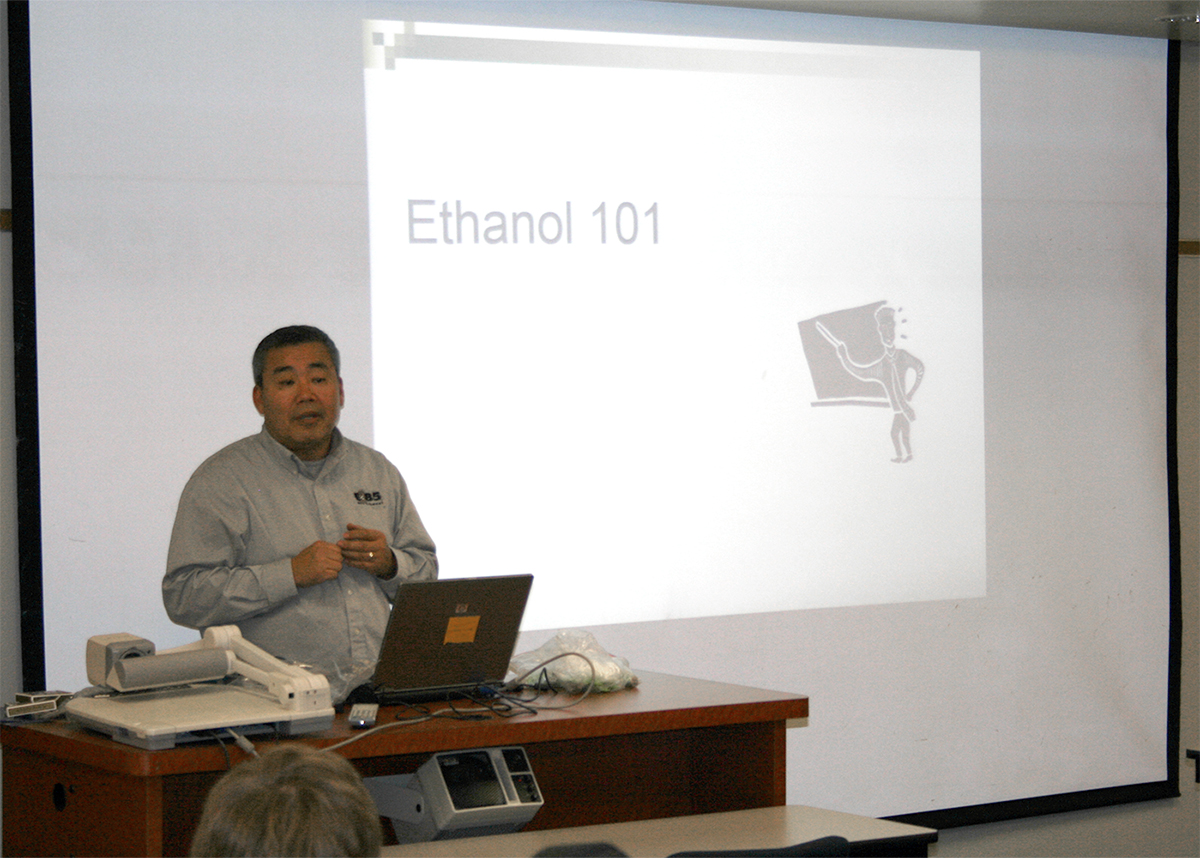
One way to increase awareness and knowledge of ethanol is to connect with the next generation of mechanics, the men and women who will be working on our cars and answering our fuel and engine questions for the next 40 years or more.
The Minnesota Corn Growers Association (MCGA) is doing just that. With support from Minnesota’s corn farmers, Hoon Ge of MEG Corp, a leading fuel consulting company, travels throughout the state and conducts fuels seminars for automotive classes at many of Minnesota’s technical colleges.
Ge is a chemical engineer with over 25 years of experience in the petroleum, refining and alternative fuels industry. In addition to Ethanol 101, Ge’s fuels seminar covers everything from the history of gasoline in America to the blending process.
Since ethanol has so many myths surrounding it, Ge focuses a significant portion of his seminar dispelling those myths and answering students’ questions about ethanol.
“These are younger, up and coming mechanics,” Ge said. “Their minds are open and they want to learn. Unfortunately, too many older mechanics have already made up their mind that ethanol is bad.”
At St. Cloud Technical & Community College (SCTCC) on Nov. 12, Ge spoke to an automotive class of about 25 students.The first ethanol-related question was from a student who wondered about fuel economy with ethanol.
Ge said there is no loss in fuel economy with E10 and minimal, if any, with E15. Ge also informed the class that the loss of fuel economy in blends like E85 are often more than offset by the price savings at the pump. The fuel economy with higher ethanol blends could also be improved if engines were better targeted and tuned to run on the fuel, Ge said.
Another student asked about ethanol being corrosive.
“Corrosiveness has nothing to do with ethanol itself,” Ge answered. “It has more to do with how the fuel is handled and water being in the tank.”
Ge also went over the benefits of ethanol, which include reducing our dependence on foreign oil, cutting greenhouse gas emissions, using a homegrown, local fuel and getting an octane boost. He also talked about the food vs. fuel myth, and highlighted that for every 56-pound bushel of corn used to make ethanol, we get about 18 pounds of high protein livestock feed as a by-product.
The seminar at SCTCC was the sixth of seven seminars Ge had scheduled at colleges this fall and winter. He’s also led biofuels seminars at a workshop with the Minnesota Trade and Technical Industrial Association and at the Eco Experience Exhibit at the Minnesota State Fair.