Toquam family carries on conservation and farming tradition
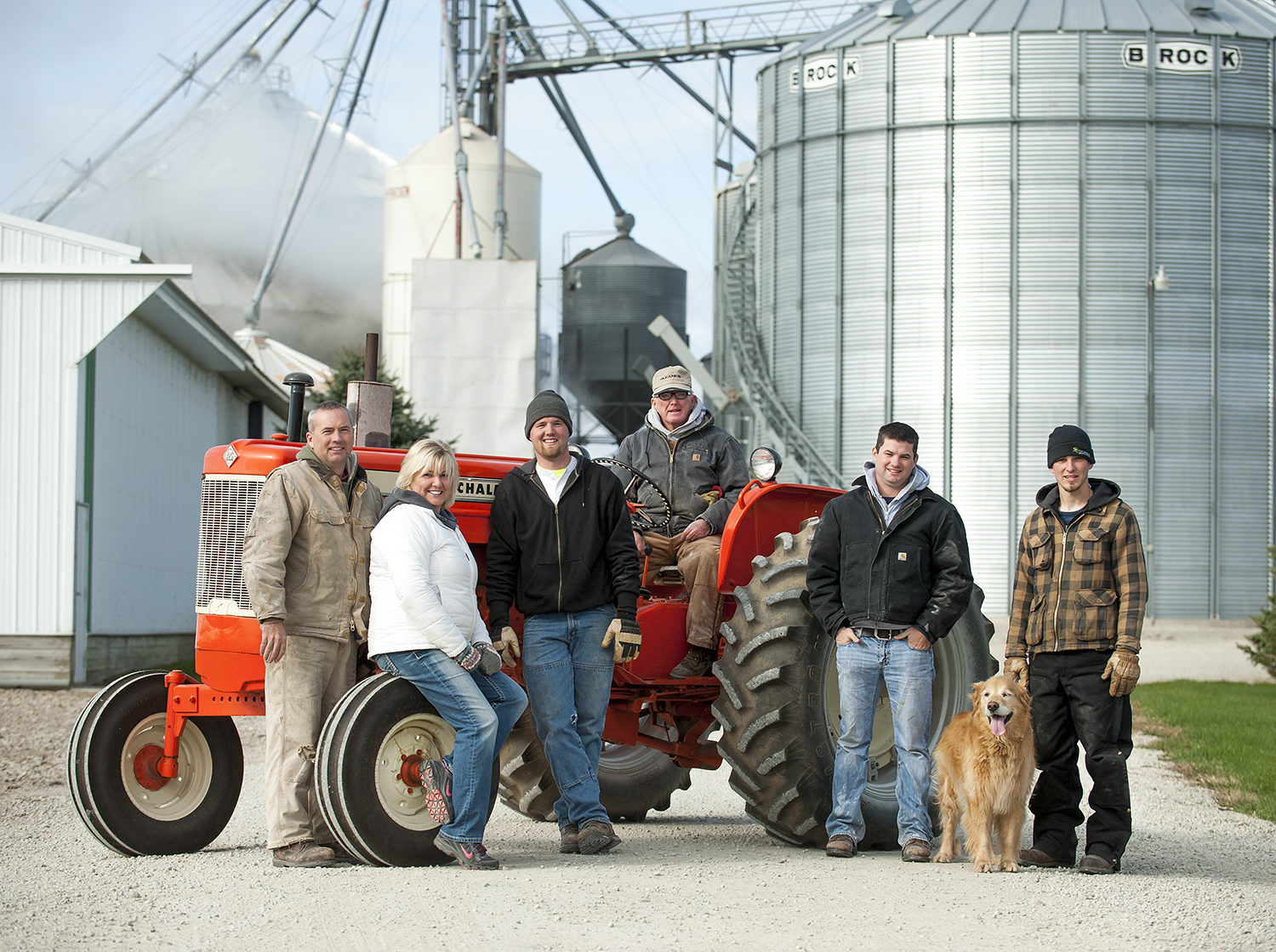
The Toquam family’s history of on-farm conservation efforts started back in the 1930s, when Clifford Toquam planted a line of arbor vitae trees three-eighths of a mile long to protect his fields from wind erosion.
Today, Roger Toquam and his family are the fourth generation to carry on that farming and conservation tradition.
“There’s something bred in a farmer about knowing what’s the right thing to do,” Roger said. “It bothers us if we see soil erosion or runoff happening. It’s in our DNA.”
On his corn and soybean (sometimes vegetable) and hog farm near Blooming Prairie, Roger maintains a natural three-acre wildlife area, plants food plots for pheasants, worked with the county on a wetlands restoration project, and has practiced ridge-tilling to reduce soil erosion and runoff since 1980.
“It’s really neat to see all the wildlife around our farm,” Roger said.
He also uses buffer strips — a common conservation practice that keeps runoff from his fields out of nearby waterways. The buffers also help Roger keep weeds out of his fields.
“When we keep those edges mowed, our fields stay cleaner,” he said. “Of course, the buffers also slow the flow of water during big rains.”
Roger has seen more of his fellow farmers take steps to improve their conservation efforts over the years. Conservation tillage and side-dressing nitrogen (applying nitrogen when the plant needs it during growing season instead of in the fall) are two areas he specifically mentions.

“There’s a financial benefit, and environmentally, there’s less risk,” Roger said. “Genetically modified seeds can produce great-yielding crops in high residue. With nitrogen, corn doesn’t need it until sometime in mid-July, usually.”
Roger has also seen manure management from his hogs evolve in a more environmentally-sound direction. Roger began with 250 hogs in a small barn on his parent’s farm that had a pit underneath for manure. He had to empty that pit and spread the manure on his fields every couple of months.
“We were putting manure on frozen ground, in the snow,” Roger said. “It wasn’t ideal.”
Today, Roger has nearly 4,000 hogs that produce approximately 1.3 million gallons of manure annually. That’s a lot of manure, but as Roger’s hog operation has grown, the way farmers manage and apply manure has improved.
“Today we’re much more environmentally friendly,” Roger said. “Manure must be applied at agronomic rates. We inject it directly into the soil. A manure management plan is required for larger farms. From my personal experience the process works this way: soil samples are taken from the field that is proposed to receive the manure, manure samples are taken from our concrete pits. The manure is then applied at agronomic rates, generally in the fall.”
The following year’s growing crops then utilize the fertility of the manure. Manure is not re-applied to the field until the manure is fully utilized.
Clifford was the first farmer in the area to use rubber tires on his tractor. Roger’s parents, Orlo and Carole, were the first University of Minnesota Farm Family of the Year for Dodge County in 1980.
Yes, the Toquams are proud of their family farming tradition and the efforts they’ve taken to protect surrounding land, soil and water resources. What started with a line of trees along a field has evolved into something that will help the Toquam farm last for several more generations to come.