Gov. Council on Biofuels releases recommendations
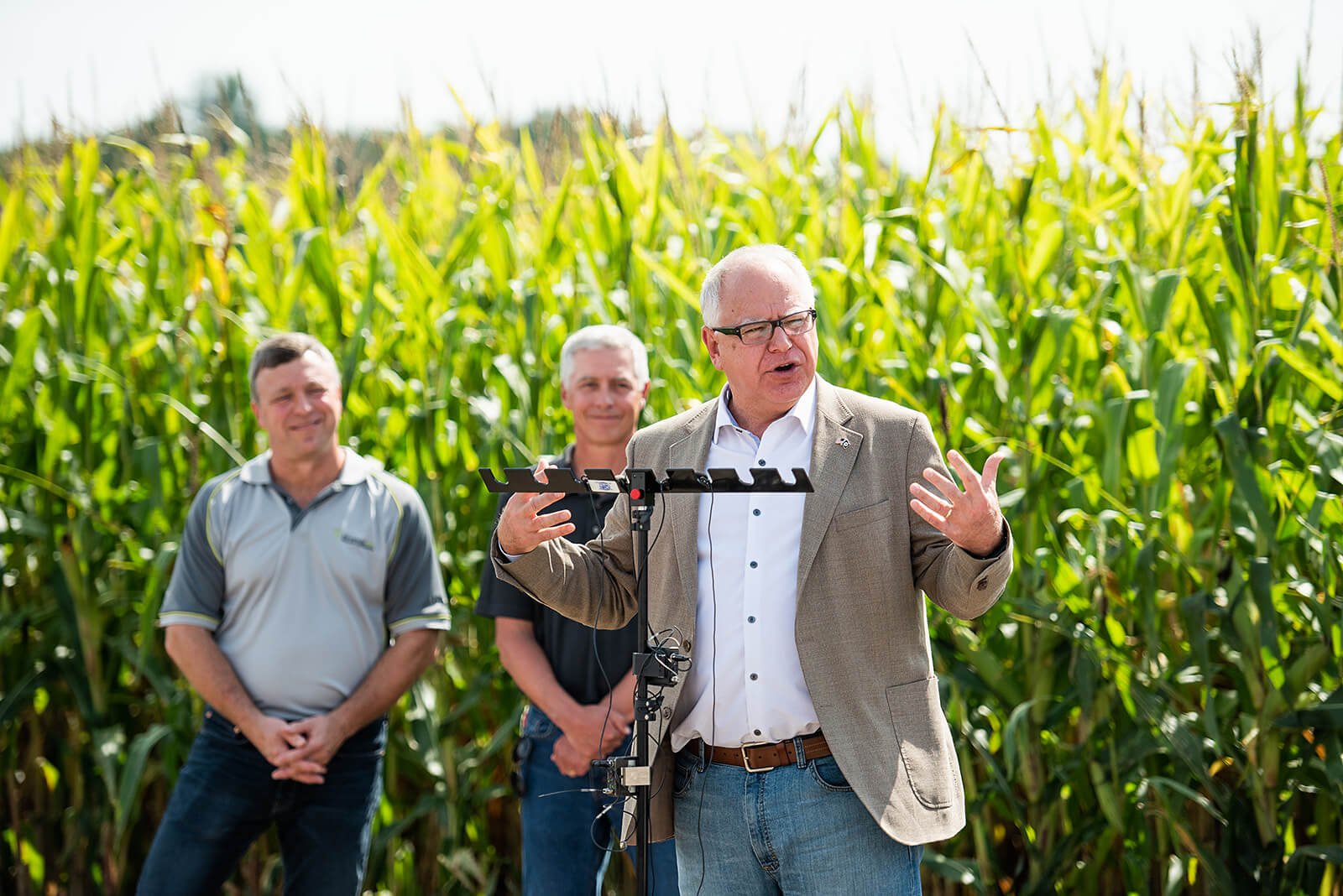
(Gov. Walz addressed the crowd at the media event with MCGA board member Brian Thalmann (left) and Heartland Corn Products CEO Gary Anderson (center))
In September 2019, Gov. Tim Walz travelled to the Plato farm of MCGA board member Brian Thalmann to announce the formation of a biofuels council tasked with promoting the use of renewable fuels in Minnesota.
Shortly after, Thalmann was named to the 15-person Governor’s Council on Biofuels, along with other energy, agriculture and environmental stakeholders. The council was tasked with producing a report that outlines recommendations for using biofuels to reduce greenhouse gas emissions.
Last week, the Council released its recommendations, which included steps that build a brighter future for E15, benefitting all Minnesotans.
The diverse group of stakeholders agreed that moving from a 10-percent to 15-percent ethanol minimum is a near-term policy priority. The council stated increasing the standard would play a vital role in accelerating the progress toward Minnesota’s petroleum replacement goal of 25 percent by 2030.
The council also indicated funding is necessary for updating fueling infrastructure so it is compatible up to a 25-percent ethanol blend. Recommendations included setting a compatibility standard and outlining a funding package, based on a new, dedicated source of funds to be leveraged with other public and private sources. The goal is to accelerate biofuels infrastructure across Minnesota capable of offering higher ethanol-blended fuel.
MCGA applauds the council for outlining a need for E15 to meet petroleum replacement goals and also raising the need to update our ethanol infrastructure.
Through the Better Fuel Initiative, MCGA will work with legislators to accelerate the timeline for a move to E15 this legislative session. Minnesota’s corn farmers will also continue to encourage an investment in ethanol infrastructure, and historically have matched these investments from public and private sources, including a multimillion-dollar investment in 2015.
Look out for more information on the Better Fuel Initiative and its goals as we approach the 2021 legislative session in this month’s issue of Corn Talk, which is delivered to Minnesota’s 24,000 corn farmers.