Grower-leaders urge strong farm bill safety net

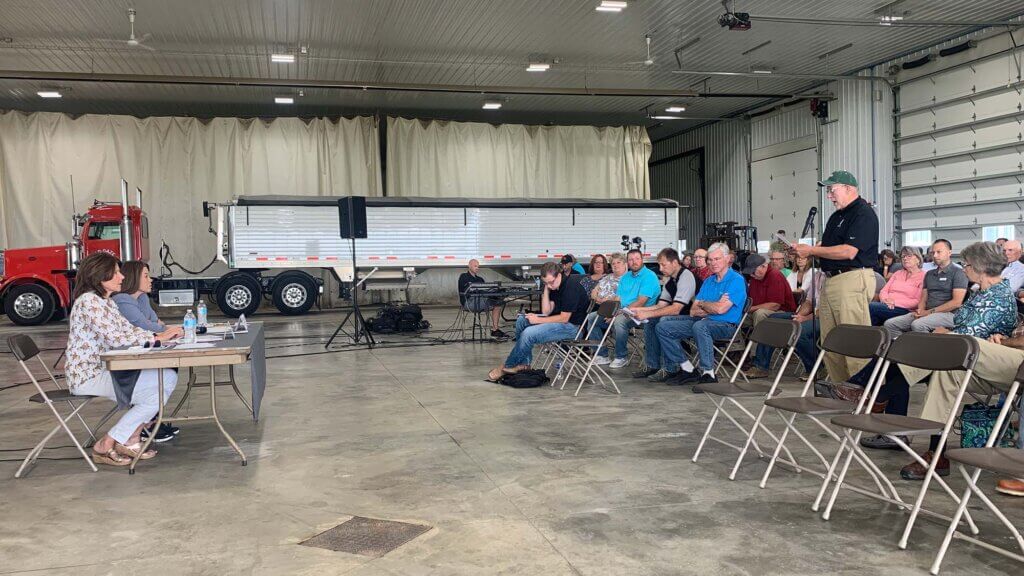
Above: Minnesota Corn Growers Association Vice President Richard Syverson testifies during a 2023 farm bill listening session Monday in Northfield.
Crop insurance not only helps farmers recover from losses. It also helps them secure loans, improve marketing and make needed investments in the farm.
Additionally, increasing loan rates and reference prices under the Agriculture Risk Coverage and Price Loss Coverage programs would help farmers deal with record input costs and volatile crop prices.
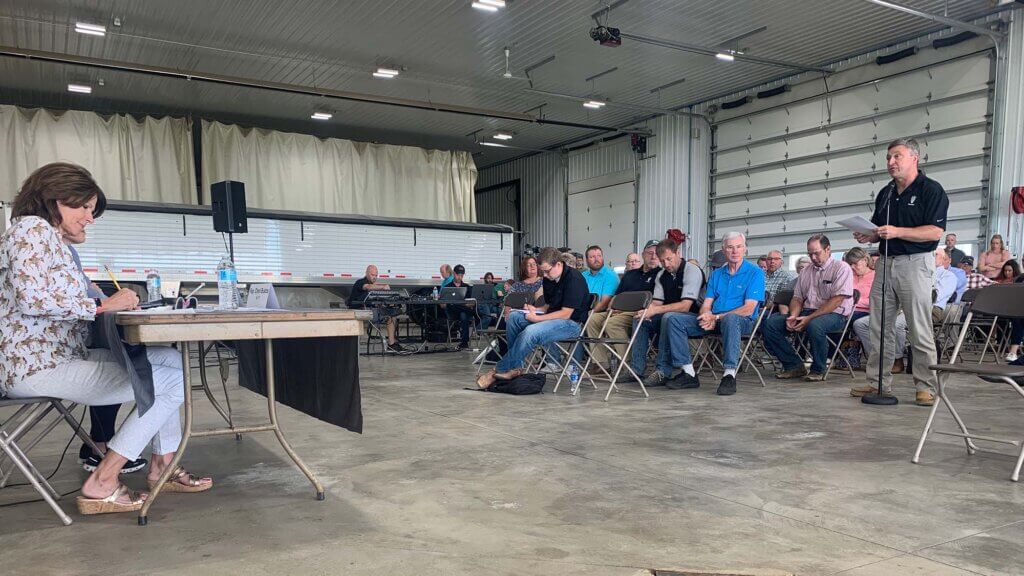
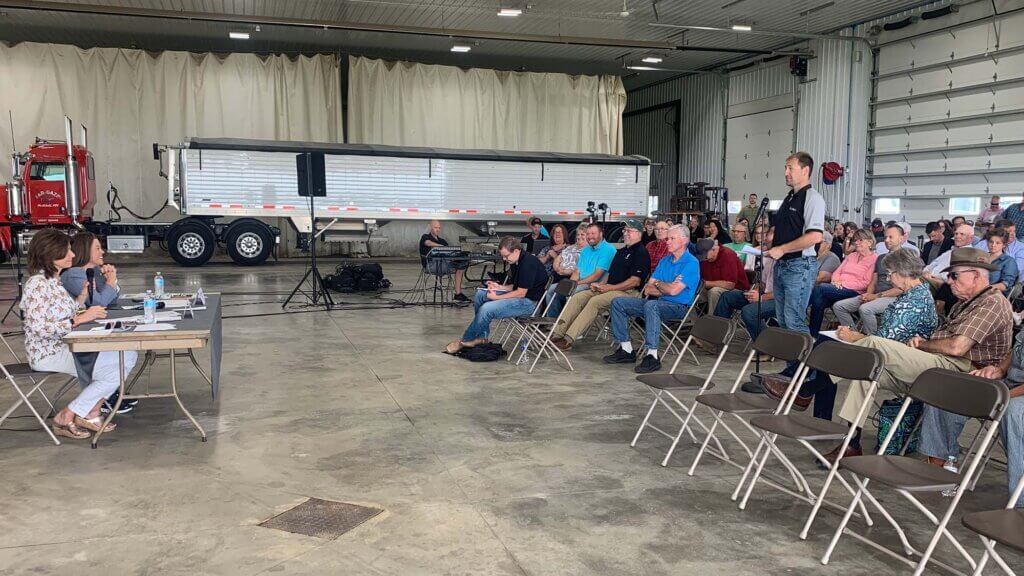
Those were among the messages Minnesota Corn Growers Association (MCGA) Vice President Richard Syverson and Secretary Jim Kanten delivered to two members of Congress on Monday during a farm bill listening session.
Syverson, who farms in Clontarf, and Kanten, who farms in Milan, were among the many farmers and agriculture stakeholders who testified during the event, which was chaired by Illinois Congresswoman Cheri Bustos. Joining her was Minnesota Congresswoman Angie Craig, who hosted the session and represents the state’s Second Congressional District.
Bustos chairs the House General Farm Commodities and Risk Management Subcommittee, of which Craig is a member.
The session was held at the farm of former MCGA president Bruce Peterson.
Syverson told Bustos and Craig about the importance of crop insurance to family farm operations, young and beginning farmers and farmers with limited resources.
He said Congress should not impose a pay limit or adjusted gross income test on crop insurance and that it should consider ways to reduce farmer deductibles. He also said Congress should maintain a strong, healthy private-sector delivery system for crop insurance.
“Agents are the farmers’ number one advisors, not just on crop insurance but on the full range of farm programs,” he said.
Kanten said that Congress should invest more in the farm bill’s crop commodity program. He also said that resources could be made available to strengthen conservation programs — including providing climate incentives — and that keeping climate and conservation initiatives inside the conservation title makes the most sense.
“If farmers are not profitable, we can’t take on conservation or climate projects,” he said. “If we are profitable, with incentives and flexibility, we can help a lot.”
The testimony by Syverson and Kanten was the latest effort by MCGA to ensure that our members have a voice in the 2023 farm bill. Earlier this month, MCGA grower-leaders advocated for strengthening the farm bill safety net in Capitol Hill visits during Corn Congress.
In addition to Syverson and Kanten, MCGA board members Brian Thalmann and Harold Wolle testified Monday in their capacities as members of the National Corn Growers Association Corn Board.
To learn more about MCGA’s advocacy efforts, visit mncorn.org/advocacy.