Export Exchange brings US face to face with the world

Written by Jonathan Eisenthal
The recent Export Exchange 2022 brought nearly 500 representatives of agricultural trade from 50 countries to Minneapolis, and the face-to-face contact could provide a tremendous boost to U.S. farm trade.
As a member organization of U.S. Grains Council (USGC), Minnesota Corn supports the biennial Export Exchange conference, because of the vital role that exports play in the prosperity of Minnesota farmers and our rural communities.
[More: See who’s buying US corn]
“During Export Exchange, (buyers and sellers) can start an initial conversation, and then come back four or five times and continue to negotiate,” said Kurt Shultz, senior director of global strategies at USGC, the organizer of Export Exchange.
“If you are an established company and you have established relationships, you can obviously do that by phone call,” Shultz said. “But a lot of companies, they know the big players, but they don’t know the intermediate players. (Export Exchange) gives that time for them to build relationships, to sit down, and try to find a way that will work for both parties.”
Buyers representing some of America’s biggest grain and grain coproduct export markets attended Export Exchange. Also attending were representatives of emerging markets. Thanks to USGC’s expanding office presence, for example, delegations from South Asia, East Africa, and West Africa, attended the event, according to Shultz.
“Part of our job is to go where commercial markets aren’t currently working and to try to build capacity to emerge and become future markets,” he said.
Here are overviews of three emerging markets, as explained by buyers from those countries who attended Export Exchange.

Kenya opens itself to US trade
“We are new to the U.S. market, because our legislation did not allow us to buy (genetically modified) crops,” said Billy O’Kongo, a buyer representing Unga, Ltd, an animal nutrition company in Kenya. “This year we got a new president (of Kenya), about two months ago, and we reversed that legislation, so now we can buy GM crops. … Now it’s available, and we have come to see what is here.”
O’Kongo said this season they are looking primarily at U.S. wheat, but he didn’t rule out buying U.S. corn in the future, if the commodity price and the cost of transportation align correctly.
Shultz sees a great prospect for growth there: “In Kenya, livestock feed uses compete for the same local supply (of white corn) that is used for human food. This new legislation will allow them to buy GM products, and theoretically, if they can get access to yellow corn, then that will go to the feed industry, and the white corn they produce themselves will stay in the human consumption sector, so it takes some of the pressure off the competition between those two sectors.”
Kenya, historically, has imported grain from Russia and Ukraine, but the war there has made them look to other world markets, O’Kongo said.
O’Kongo described the livestock industry in Kenya: “60% is poultry, another 20% is cattle, and 10% pork.”
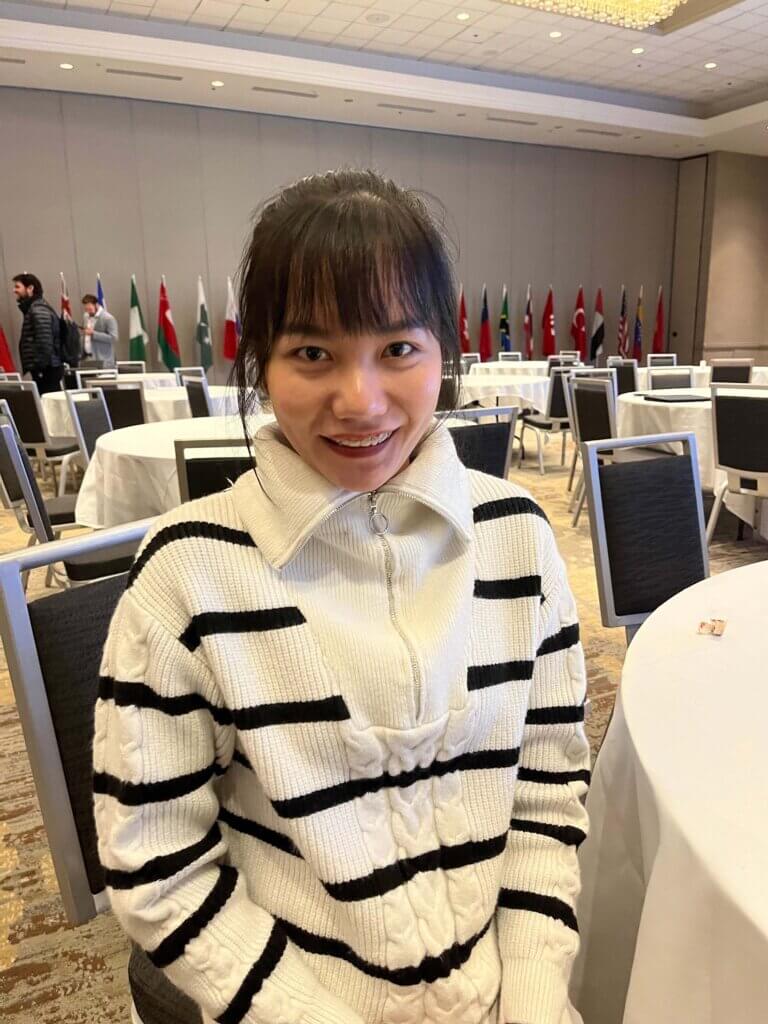
Vietnam fuels fish farms with ethanol co-product
“We are importing more than a million tons of DDGS from the U.S. per year,” said Tran Thi Cam Tu, a regional purchaser with De Heus, an animal feed company in Ho Chi Minh City, Vietnam.
“All the prices on the world market are high, so the competitiveness of the U.S. DDGS is still there.”
“Vietnam is our second-largest DDGS export market, importing approximately 1.4 MMT of U.S. DDGS annually,” Shultz said. “They buy both in bulk and through containerized shipments, and so Vietnam is a huge growth opportunity and a very reliable customer of distillers grains.”
Tu described Vietnam’s animal feed industry: “We have swine, poultry, cattle, and aquaculture. Aquaculture is definitely a growing segment in southeast Asia. There are fish farms all around the country.”
She said Vietnam is open to importing a wide range of agricultural products.
“We are looking at all products from the United States from time to time, and whenever we see that it is competitive, in terms of prices, compared to South America, we can definitely buy it,” Tu said.
After Export Exchange, the Vietnam delegation went to Indiana for a field trip focused on corn production, including a tour of an ethanol plant.
Pakistan enters US grain, livestock market
Devastating floods across the southern regions of Pakistan have destroyed a major portion of the nation’s agricultural production, said Shakir Umar Gujjar president of the Dairy and Cattle Farmers Association of Pakistan.
“We have a shortage of feed for all our cattle and poultry,” Gujjar said. “There have been terrible floods that have created this shortage. That is our focus, to have the cattle and dairy feed available to us. We are short around 50%. This is the first time we are experiencing this kind of flood. We have not imported U.S. farm products before.”
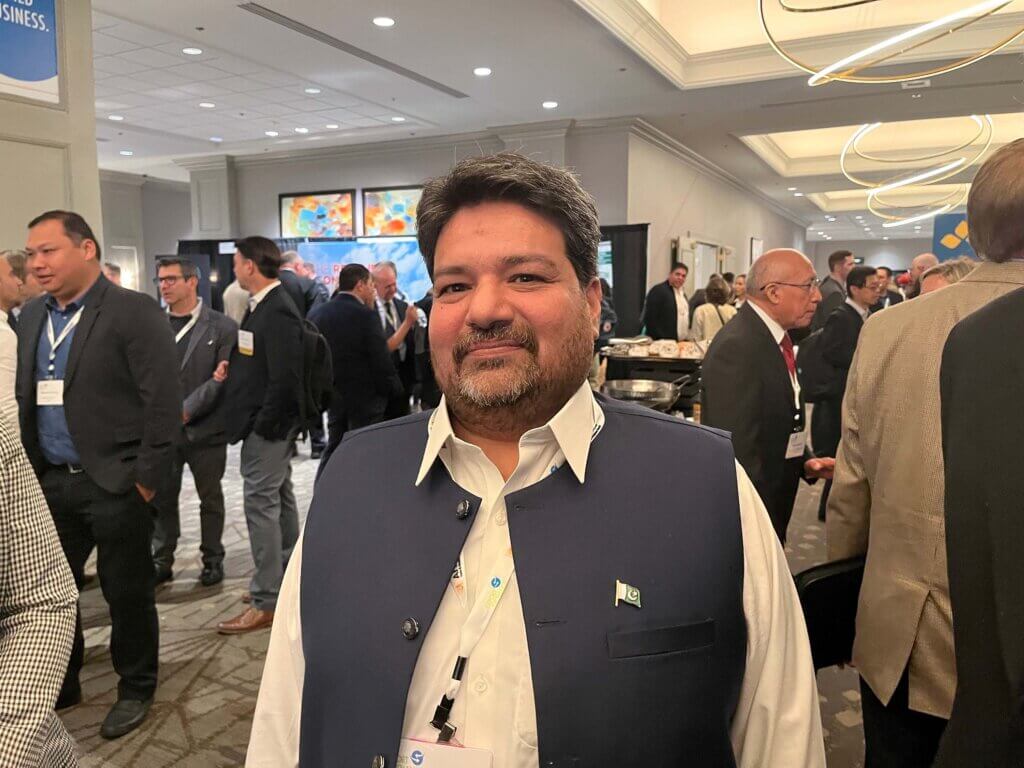
He reported that the Pakistan delegation has identified DDGS as a likely purchase.
“The Council recently opened its South Asia office in the region in January, and we are in the process of building up our outreach efforts with Pakistan,” Shultz said. “It’s a terrible situation that unfolded in Pakistan this last year, and we are in the initial phases expanding our engagement there with the hope for a more robust outreach program in the near future.”
In the interim, an array of organizations have rallied to Pakistan’s aid to help them make the purchases they need and to rebuild their animal feed industry. The assistance is coming from the International Trade Center and USAID, along with other non-governmental organizations, Gujjar said.
“We estimate that 500,000 cattle have been lost in southern Punjab province,” Gujjar said. “We are importing pregnant Holstein heifers from the Netherlands, U.S., and Australia, to help produce the dairy products we need.”
Since these heifers produce 50 liters of milk a day, Gujjar said, they depend on a large volume of high-energy feed, and distillers grains is part of that ration.
Learn more about the work of the U.S. Grains Council at grains.org.