Harvest 2022 went quickly, MN growers say

Written by Jonathan Eisenthal
According to the USDA, Minnesota farmers had harvested 91% of the state’s corn crop, as of Sunday, Nov. 6. We caught up with growers who were laying tile, doing field cultivation, and finishing up other final tasks before winter sets in. Growers reported that harvest went quickly this year thanks to clear weather. The flip side of that lack of rain is a worry about soil moisture recharge, but as of now, for many growers across Minnesota, a successful 2022 harvest is in the bin.
Bryan Biegler, who farms in Lake Wilson, in the southwest corner of Minnesota, was doing strip tillage for a custom farm client when he spoke with us.
He reported finishing harvest in late October.
“Harvest went fast,” Biegler said. “It’s good, you know. There was no break, which meant you had to force yourself to stop and do catch-up time on things. We’ve only had about a day and half when we were down, from a little bit of rain. Otherwise, it’s just been pretty much ‘go,’ every day.”
Despite adverse planting conditions, and drought throughout the summer, Biegler reported he harvested a decent though not stellar crop.
“Yields were better than I anticipated,” Biegler said. “They were off from a regular year, but considering how late we got the corn planted — and they didn’t go in in real stellar conditions, then how hot and dry it turned out to be, all summer long — I was pleasantly surprised by how well everything turned out.”
Richard Syverson, who farms near Benson, agreed that harvest progressed quickly.
“The only challenge in this year’s harvest, and I say this in jest, is that it went so well that I got really tired,” Syverson said. “In a normal harvest year, you are going to get at least an occasional rain delay. This year, we started harvesting soybeans, and we went right straight through into corn and then got done. Without a rain delay. It was great. I very much appreciated it.”
Syverson noted that harvest was a little earlier than usual, which surprised many growers who faced wet conditions and late planting in the spring.
“The soil was saturated when we planted,” Syverson recalled. “We didn’t get a whole lot of rain, but we got enough. So, we had an abundant crop, especially the corn. We had lots of warm, sunny days in the summertime. The crop never slowed down growing. It popped out of the ground because the soil was warm, (and) it just got up and going, it never slowed down, so it matured rapidly. It dried down (on the stalk) so we had minimal drying expense. That was really nice.”
Syverson said he is looking forward to seeing how his newly adopted vertical tillage system, which he is using now in the soybean stubble, will set up his field for corn production next year.
He made the change at the suggestion of the Minnesota Agricultural Water Quality Certification Program of the Minnesota Department of Ag, but he had been considering reducing his tillage intensity for a while. That’s because he has seen erosion problems, and also because he knows a number of other local growers who had success with vertical tillage.
“Turns out vertical tillage really saved my behind (last) spring, because that machine worked in the muddy and awful conditions we had, where my field cultivator didn’t. It was a really fortunate thing I had switched,” Syverson said.
An easier harvest
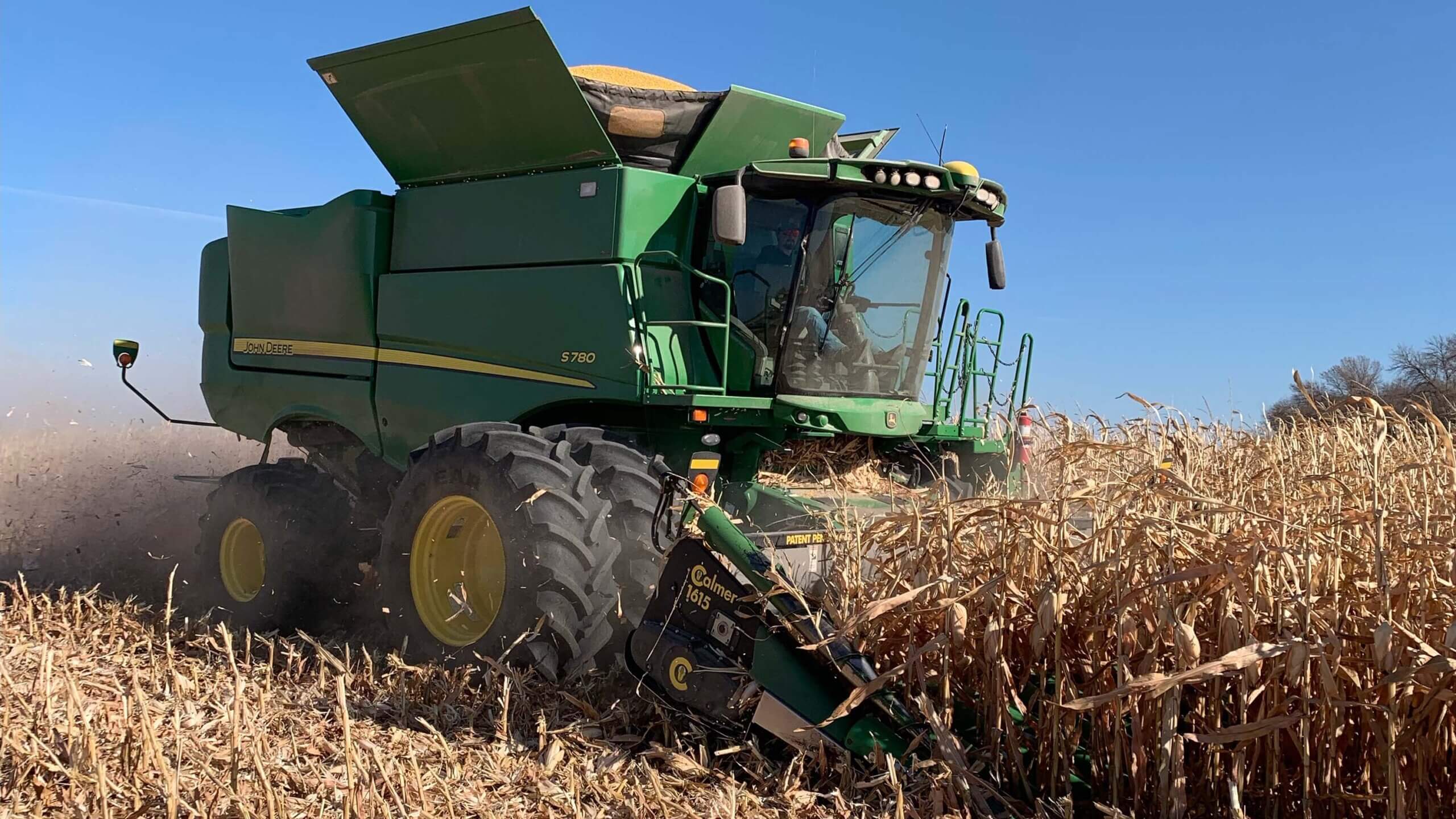
Brian Thalmann, who farms near Plato, about 50 miles west of Minneapolis, also felt combining went by the numbers this year. When we spoke with him, he was trying to install some tile before forecasted rain arrived.
“It was one of the easiest harvests, due to the dry weather conditions,” Thalmann said. “I think we had one partial rain delay that was more of a drizzle one day. Harvest for us lasted from mid-September to early November, and we went the whole time without any rain. It was nice for harvest, but a little nerve racking, as the fall went on, realizing we are getting drier and drier. We only picked up a 1/2 inch of rain, total, since mid-August. Even the most recent rain was only 4/10ths. Today, as of 6 p.m., we’ve only had a 10th of an inch, even though there have been heavy bands of rain coming across the state. I’m hoping we’ll pick up a couple of inches over the next few days.”
Thalmann paints a picture of a drought map in Minnesota that is growing, week by week. But the facts on the ground were that some farms got rain this year while others didn’t. The rule for precipitation was variability across the region, he said.
“We actually had average to above yields in soybeans this harvest,” Thalmann reports. “Our corn yields were down 10% to 15% from last year. … when we had rains almost every week during August and September. This year we only had a 10-day period in the middle of August where we picked up good rains, and then we never had much after that. I thought we had enough rain to pull the crop through, but it wasn’t the case. You get areas, 10 miles west of us that had yields 10 to 20 bushels higher than us. We were just on the edge of that area and it was a case of have and have not, for summer rain.”
Strong grain prices
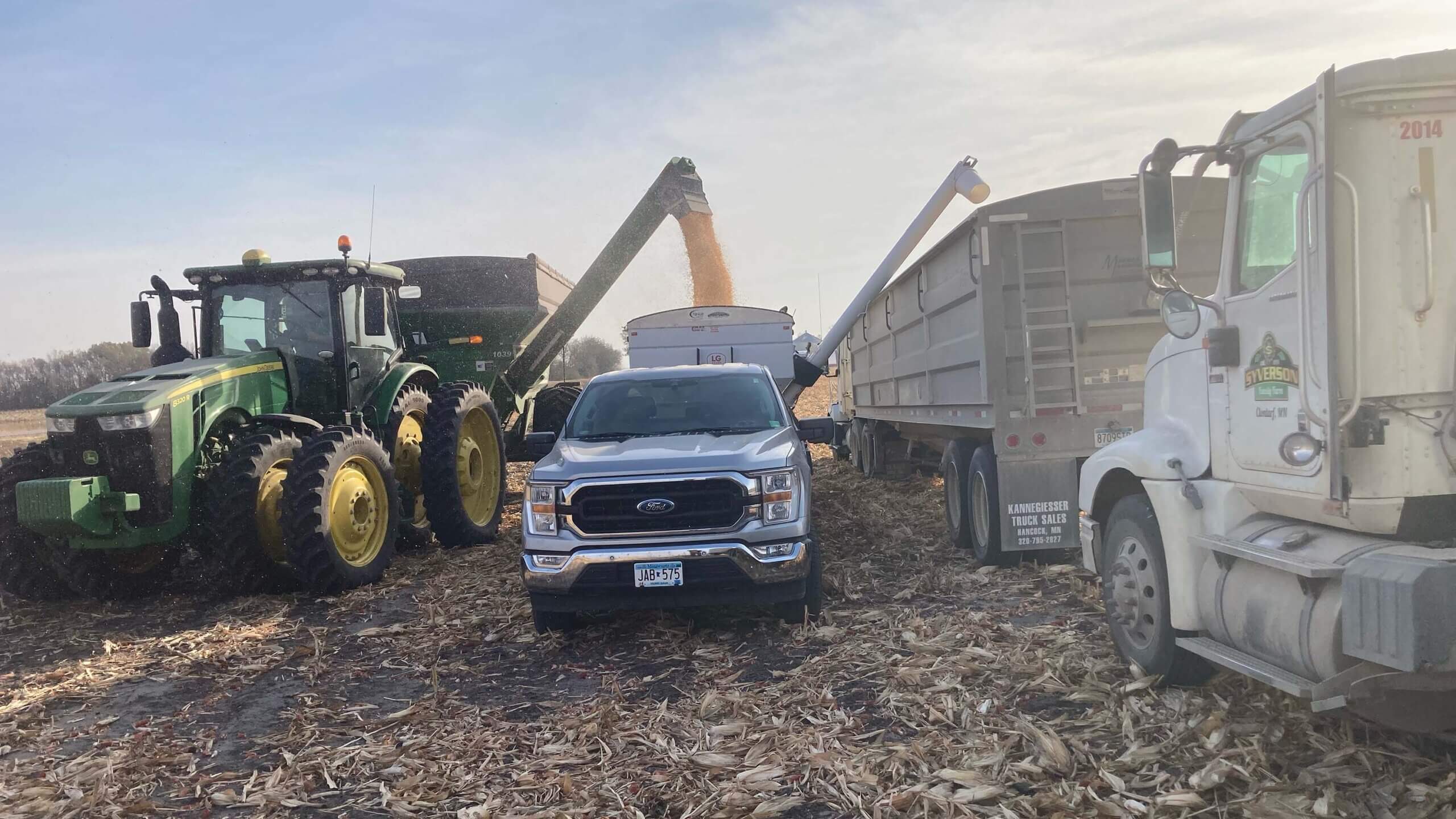
Syverson said he was pleased by strong grain prices, which mean a little less worry about repaying operating loans.
“There is margin this year,” he said.
Thalmann said strong prices in the market should compensate for the higher cost of inputs. He felt lucky to have secured nitrogen fertilizer for the 2023 crop at a lower price than what he paid for this year’s nitrogen, potassium, and phosphorous. The other harvest time worry that lifted over the course of the fall was the ongoing reports of parts shortages. Thalmann’s operation got through harvest without a major breakdown or equipment repair that could have delayed the proceedings.
“Machinery availability continues to be tight, so if you are looking at replacing something, you really have to be planning ahead and thinking six months or a year out,” Thalmann said.
As harvest season turns into farm planning season, Biegler said he has had his notebook out as he does his strip tillage cultivation, capturing ideas and thoughts of things to try for next year, as he crosses the fields.
“You are always making plans, trying to get as much field work done in the fall as you can and getting things lined up for next spring,” Biegler said. He said getting the strips right was the focus right now, before he could really dive into thinking about his plans for next year. “But there are a few different things that I am looking at, for fertility, and trying some different cover crops. As I sit in the tractor, I jot some notes down and try to come up with some new plans for next year.”
“The biggest thing with the covers is how I am going to get the seed applied. There’s some new technology out there. There’s actually a company out there that’s got robots that will buzz up and down your fields, going between the rows, and spin cover crop seed on there for you, instead of having to drive a machine through the fields. I’m hoping to try it out in a few places. I hope it works out.”
2022 corn crop at a glance
According to the Nov. 9 report from NASS/USDA:
“(National) cornproduction for grain is forecast at 13.9 billion bushels, up less than 1%from the previous forecast but down 8% from 2021. Based on conditions as of Nov. 1, yields are expected to average 172.3 bushels per harvested acre, up 0.4 bushel from the previous forecast but down 4.4 bushels from last year. Area harvested for grain, forecast at 80.8 million acres, is unchanged from the previous forecast but down 5% from the previous year.”
Minnesota is tied for third-highest average projected yield with Indiana: both states have harvested an estimated 191 bushels of corn per acre. For Minnesota, this would be an increase of 19 bushels per acre over the previous year. Illinois currently has the highest projected yield, with an estimated average of 215 bushels per acre, and Iowa is in second place at an estimated 202 bushels per acre.
Minnesota is projected to produce 1.442 billion bushels of corn, a little more than 10% of total U.S. corn production.