2024 state legislative session gets underway
An update from Minnesota Corn Growers Association Senior Public Policy Director Amanda Bilek
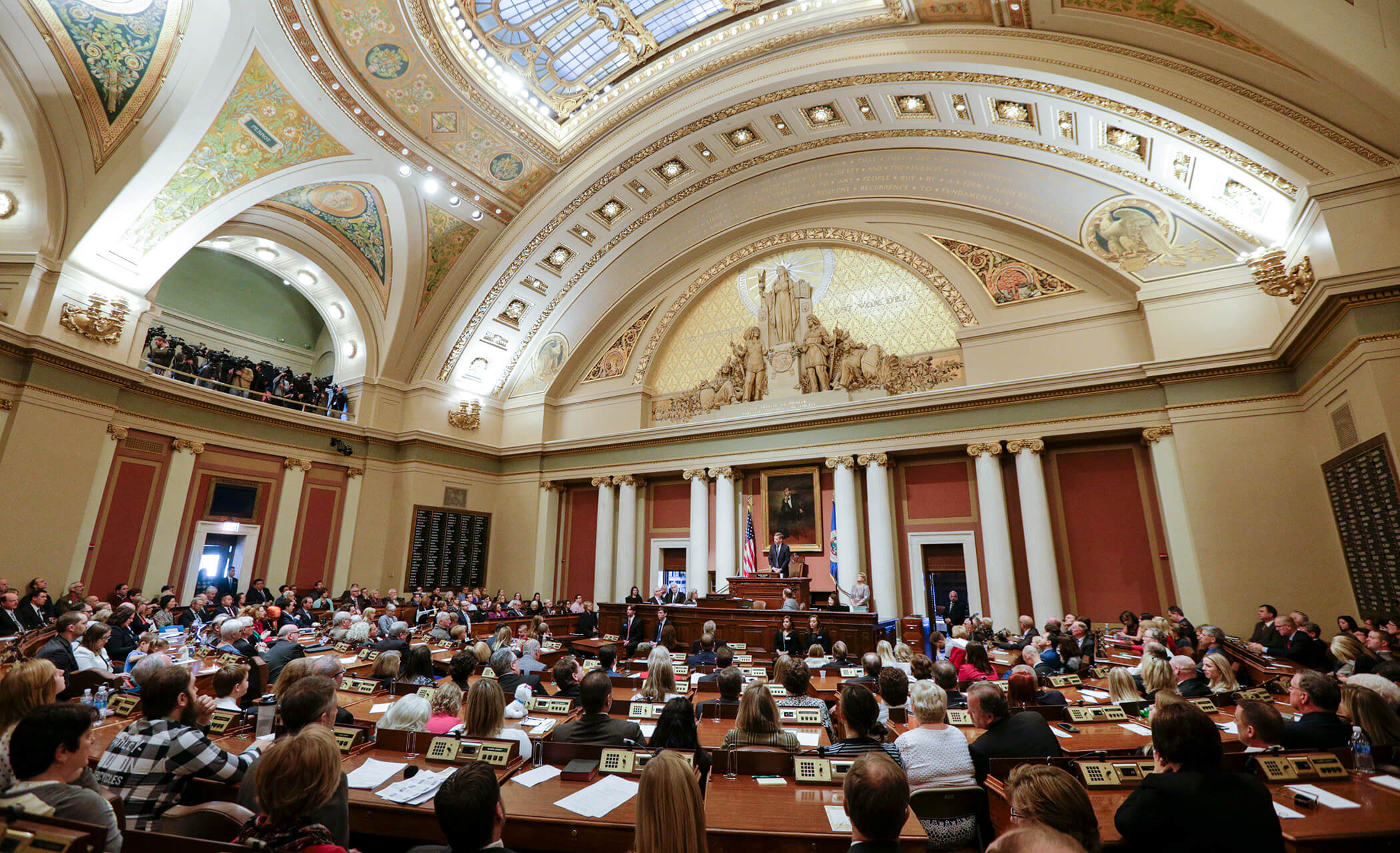
Today is the second official day of the 2024 legislative session. Last week I wrote about the larger dynamics for the 2024 session. This week I want to detail the policy priorities the Minnesota Corn Growers Association will be working to advance this year in St. Paul.
Nitrogen management and water quality impacts will receive increased attention at the Legislature this year due to the Environmental Protection Agency’s intervention in southeast Minnesota following an environmental group petition criticizing the work of state agencies, local partners and farmers to protect drinking water in the region. When Minnesota Corn responded to the EPA action last fall, we emphasized that Minnesota corn farmers share the goal of protecting drinking water in Minnesota and that corn farmers are a part of the solution in addressing nitrogen challenges in southeast Minnesota and other vulnerable groundwater areas. Through the Minnesota corn check-off, each year corn farmers invest their own money into research, technology, tools and best management practices in order to continue to make farming more efficient with fewer inputs and greater productivity. This is evidenced by increases in nitrogen use efficiency from 1.22 pounds of nitrogen per bushel of corn grown to 0.86 pounds. Implementation of voluntary practices and adoption of technological innovations by farmers has helped to increase production on the same amount of land using fewer inputs. Our goal this legislative session is to highlight those efforts for policymakers, provide information on modern farming practices and support common sense solutions rooted in partnership.
There has also been an increased focus on soil health and conservation practice adoption by Minnesota farmers. We have been supportive of the Minnesota Department of Agriculture’s Soil Health Financial Assistance Program, first implemented in 2022 under a pilot program and expanded statewide with new resources last year. We will continue to support this program and advocate for increased resources because demand has far outstripped funds available. However, in order for farmers to continue to make progress on soil health and conservation practice implementation, farmers need to maintain access to federally reviewed and approved crop protection tools and agricultural drainage. These tools are fundamental to sustainable crop production, and we will continue to highlight this vital connection as we respond to proposals that would restrict access to the tools farmers need to produce a crop.
One of the reports delivered to the Legislature on February 1 is a set of work group recommendations for a Clean Transportation Standard or a Low Carbon Fuel Standard. Essentially, this is a policy that aims to reduce carbon emissions in the transportation sector by evaluating low carbon fuel options, on a lifecycle basis, compared to a baseline and scored by the carbon intensity of each fuel. MCGA provided testimony last session highlighting our concerns with the proposed legislation. I served as a commodity group representative on the work group, and look for a future post diving deeper into this policy proposal.
As the legislature considers the policy this year, MCGA will be working very closely with our agriculture and biofuel partners to emphasize that the policy needs to have an achievable carbon reduction schedule, be technology and feedstock neutral, use the most recent version of Argonne National Laboratory’s GREET model to evaluate fuel pathways and include strong consumer cost protections especially fuel cost impacts for family farmers. There are several other policy design considerations we will be discussing with legislators to help ensure that if Minnesota is going to enact this policy, there needs to be a level playing field for biofuels to compete and benefits for Minnesota farmers.
The last piece I want to highlight is environmental permitting. The legislature will likely be considering a permitting efficiency proposal for renewable electricity and transmission projects. However, there is an overdue need to increase timeline certainty for value-added sectors for corn, including livestock and biofuel production. Improvements in timelines to complete the environmental permitting process could also help rural communities take advantage of new opportunities such as sustainable aviation fuel or biobased product manufacturing. We will be working with our partners to help ensure that the permitting efficiency discussion is not confined to specific technologies but cuts across several raw material processing and agriculture sectors.
Next week is our annual MCGA day on the hill where farmer-leaders from across Minnesota come to St. Pual to meet with individual legislators, legislative leadership and administration officials to advocate for MCGA policy priorities. Look for a short preview post and recap post later in the week.