Help is a call, text, or email away
Spotlighting Minnesota’s agriculture mental health support program
Written by Jonathan Eisenthal
By some estimates farmers are two to three times more likely to die by suicide than the general population. In this year of low commodity prices, high input costs, and difficult crop conditions, many farmers are feeling intense economic pressure that can translate to debilitating stress.
But in Minnesota a lot of help is just a phone call, text, or email away. The result of all this support is that the number of self-harm and stress-related accidents is likely falling. Professionals and advocates in Minnesota bring not only passion to helping farmers and farm families, but they also wield well-supported resources in the cause. Farmer groups like Minnesota Corn, along with farm media serving the region, are working continuously to remove the stigma around seeking help. They are encouraging everyone to join the conversation about mental health.
The state of Minnesota offers nation-leading programs through the Minnesota Department of Agriculture and has done so since the Farm Financial Crisis of the 1980s, according to Minnesota Commissioner of Agriculture Thom Petersen. These issues are close to home for him, because he and his wife, Alana, are farmers in Pine City, Minnesota.
The centerpiece of Minnesota’s program is free, confidential counseling help: two mental health counselors, Monica McConkey and Ted Matthews, are on call for the state’s farmers. Also central to addressing farmer stress: 11 farm advocates work closely with farmers on every aspect of farm finance, from crop disasters to issues that arise when farmers hand the farm on to the next generation.
“Your life has value!”
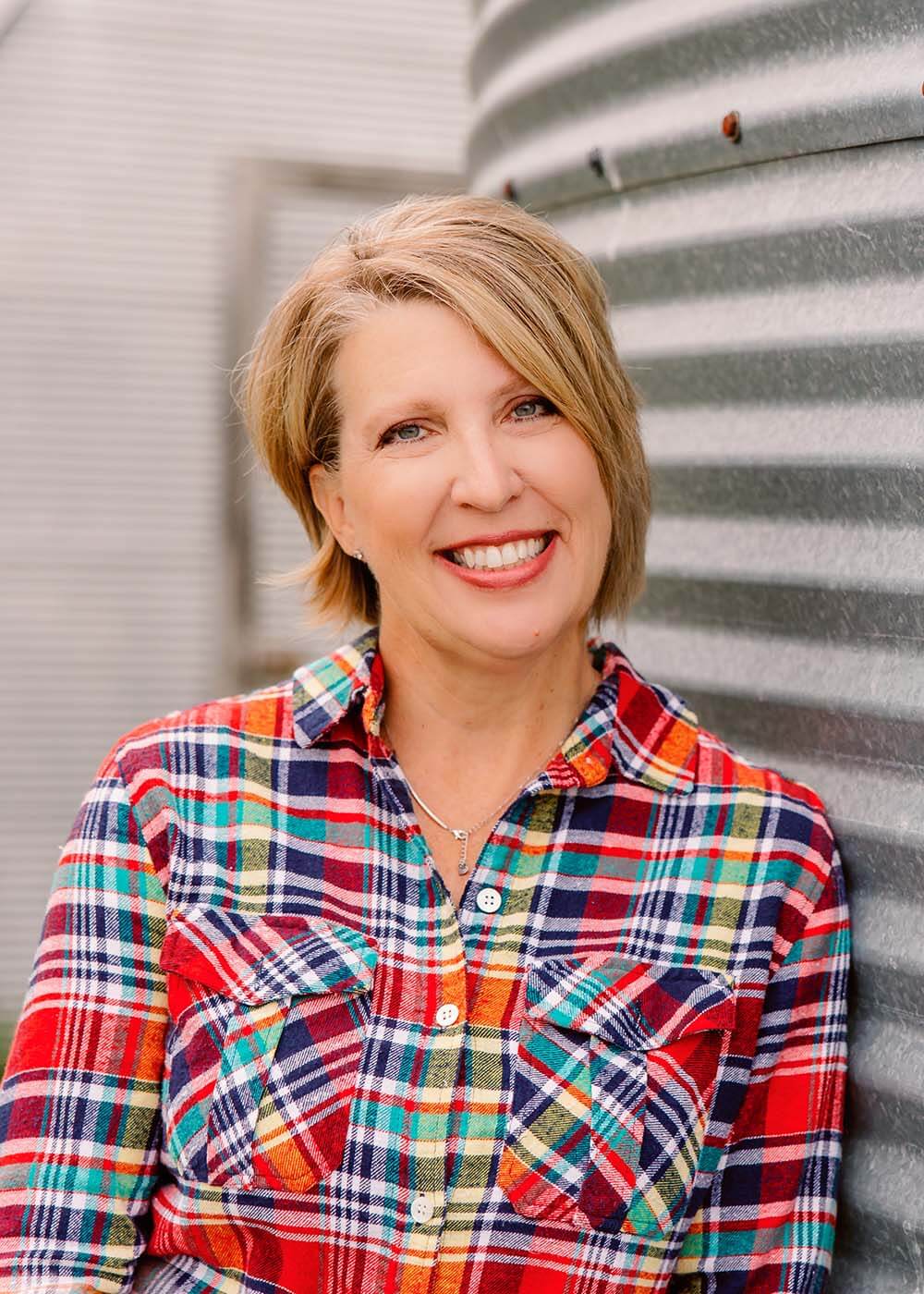
“Farmers are a hugely at-risk population,” McConkey said. “It sounds like the low ag economy is going to be around for a while. I just want our producers to know, that they have value on and off that farm. Your life has value. No matter the crop prices, the weather, or how much debt you carry. Your life has value! It’s so important to take courage and not to give up hope, even when things don’t look great. There are resources to walk along side of you, to help you get through it.”
Mental health and farm safety are inextricably woven together, according to Commissioner Petersen, who worries not only about deliberate self-harm, but a kind of carelessness that may come from stress, exhaustion, and feelings of desperation.
“Unfortunately, I’ve known way too many farmers who have taken their own lives. I also have known a lot of farmers who have passed away in accidents or been injured. I always think of the two together—health and safety,” Petersen said. “When I talk to families when there has been an accident on the farm, the family members will say the accident victim was stressed out, he or she was working too hard. Wasn’t thinking. That mental health piece of it can be really tough.”
“Farming is isolating. A lot of times you can’t control things that have a major impact on your business. You can’t control interest rates, the weather, or the markets. You are at the whim of so many different things. And then, stuff just happens. I find myself often saying to my wife, regarding the farm, that ‘when it rains it pours.’ Everything is broken at once. Here’s another bill. It’s a lot to manage. On the flip side, I am really proud of the work that we have been able to do over the years in Minnesota.”
Before Petersen served as Minnesota’s Agriculture Commissioner he worked as the Government Relations Director for Minnesota Farmers Union. Through his role at MFU and now as Commissioner, Thom has concluded that Minnesota has the strongest farmer mental health program in the country, and we are looked at as a leader. Due to the support of legislators and farm groups—including Minnesota Corn—MDA can offer free of charge to farmers, mental health counselors and 11 farm advocates across the state. In addition Farmer-Lender Mediation, the Farm and Rural Helpline, and Farmers’ Legal Action Group provide support for farmers.
“A lot of these programs came out of the 1980s. I was a young man, just starting out farming then, and I remember how stressful the Farm Crisis was,” he said. “The big rallies we had at the Capitol, the foreclosures and auctions. All the stress of that time. These support programs came out of that, and Minnesota has been able to keep them and grow them.”
Mental Health Specialist McConkey serves the central and northern parts of the state, while Matthews serves southern Minnesota. They are both reachable by phone, email, and text. They will visit by videoconference, make on-farm visits, or arrange in-person meetings in a neutral location.
“It is unfettered access for our farmers and farm families, to reach a counselor. It is barrier free. It doesn’t cost them anything. There is no insurance bill,” McConkey emphasized. She has been with the program for five years, Matthews for 20.
The mental health support community seems to agree that farming presents a unique set of pressure points that can afflict the farmer with stress.
“The stressors of agriculture? At the top of the list are definitely those uncontrollables. The weather, commodity prices, interest rates,” McConkey said.
Farmers undergo almost as much stress when planning how to pass the farm onto the next generation. Much of the pressure can be self-applied, when the farmer worries about the lasting legacy of the farm. In addition to the practical difficulties of financial ruin, the inability to hand the farm on, to create a legacy—farmers sometimes see themselves as not only failing the next generation, but also the family that came before, and built up the farm operation, sometimes over generations.
“Generally, in the cases I deal with, there is the stress of an older generation backing away, lots of grief and loss issues—people feeling ‘who am I, if I am not a farmer?’” McConkey said. “And then there’s the younger generation wanting to expand, or change, or increase efficiency and not being given the reins to do that. “And you are all related to each other. So, you have to go to work together, and deal with these hard issues, and then you sit down and eat Thanksgiving meals together.”
Though the stressors of farming are well-known. It’s the strain it places on personal relationships that drives much of the need for counseling
“Some folks I talk with on the phone once and we never chat again. That’s what they needed. ” McConkey reports. “Other folks I meet with in person, or virtually, sometimes weekly, or biweekly, for a year, or more. So, it’s a wide range of services, all based on client need. As far as what it looks like when someone calls, or emails, typically, the number one reason people reach out to me is difficulty in relationships. Underneath that, is a whole lot of stress that comes from farming. The ‘uncontrollable’ of farming. It may be a bad weather year, a bad finance year, or none of the above, but there are still relationship issues.”
Overcoming resistance to seeking help—a key issue is having a therapist who ‘speaks farmer’
McConkey frequently works with family members to develop strategies to overcome resistance from another family member who could use mental health support.
“It’s fairly routine for me to get a call from someone saying, ‘my dad really needs to talk to you,’ ‘my brother…’, ‘my mom…’ They just won’t pick up the phone and do it,’” McConkey said. “I do talk them through some strategies to help the family member pick up the phone, but there are also strategies just to support them. You yourself can work on things, like ‘stay calm and rational,’ or ‘focus on the things you can control.’”
Confidentiality is a condition that makes any counseling situation work, but in the case of farming, another fundamental issue is the “agricultural competence” of the counselor, according to McConkey.
“A big part of this is for the person to know that the therapist they are talking with on the other end of the line works with farmers every day and has knowledge of farming, the farm economy—that eases a lot of stress and anxiety,” McConkey said. McConkey grew up on a family farm and her son is the fifth generation on the family farm working with her brother and parents. “That helps so much in building rapport and alleviating the tension some people experience in making that call. I call it agricultural competence. That we are competent in the area of the inner workings of agriculture.”
Family and community work together in the cause of mental health
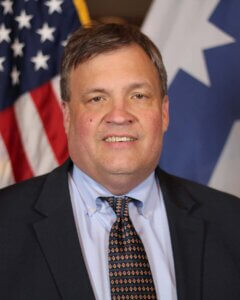
The Minnesota Legislature funds much of the mental health programming here, but the 2018 Farm Bill also included funds for mental health programming, which Minnesota has put to very good use, according to Petersen.
“We have put on trainings with the many different people who come on to your farm,” Petersen said. “It could be your milk truck driver, your crop consultant, your pastor. There are lot of different interactions in communities. So, these trainings help the folks who deal with farmers to recognize stress. So, other people, too, can step in and offer assistance, or remind people where to go to get help It’s a whole community effort. Over the course of my career, and I am very happy to see it, there is a much stronger awareness of mental health now. People, in general, are more comfortable asking for help.”
The politics of farmer mental health is bipartisan in Minnesota
“Minnesota’s Congressional Delegation—in a bipartisan way—was a big leader in authorizing the Farm and Ranch Stress Assistance Network as part of the Farm Bill,” Petersen observed. “Representative Tom Emmer, a Republican, and Senator Tina Smith, a Democrat, worked together and championed this program. It provided every state half a million dollars to help grow their farm stress assistance programs.”
Work goes forward to reauthorize it in the next Farm Bill as the Farmers First Act. One of the things Minnesota Department of Agriculture used those Farm Bill mental health dollars for was to begin working with FFA on this issue.
“They are really interested in it. Children, too, see the effects of stress,” Petersen said. “I know my kids see it when I have a tractor break down. The [Farm and Ranch Stress Assistance Network] is another thing Minnesota Corn and the other farm groups have supported. The bipartisan work, the work of lots of different groups coming together—that’s an important piece of the story of this legislation. Minnesota had resources, but a lot of other states didn’t have resources in this area. The other states looked to Minnesota, and many said, ‘Oh, we want to have a counselor and advocate program, or a Help Line.’ They modeled it after us.”
Mental health support resources for farmers and farm families
Suicide & Crisis Lifeline
Phone: 988
Crisis Text Line
Text: MN to 741 741
Both numbers offer immediate free and confidential support for people in distress. They give information about prevention and crisis resources to people who are worried about themselves or someone else.
Mental Health Specialists (Minnesota Department of Agriculture)
Monica McConkey (central and northern Minnesota):, 218-280-7785, Monicamariekm@yahoo.com
Ted Matthews (southern Minnesota):, 320-266-2390, tdmatt@info-link.net
Monica and Ted are available to farmers and their families free of charge.
Minnesota Farm and Rural Helpline
Phone: 833-600-2670
Text: FARMSTRESS to 898211
Email: farmstress@state.mn.us
The Minnesota Farm and Rural Helpline is answered 24/7 by trained staff ready to help farmers who are struggling with stress or depression. The confidential helpline connects callers to financial help, mental health counselors, legal assistance and more.
Based on an event co-created and delivered by MDA, the no-cost Down on the Farm kit includes of a PowerPoint slide set and facilitator’s guide.
Upper Midwest Agricultural Safety and Health Center (UMASH)
UMASH provides a variety of farm stress and mental health resources and support to farmers, farm workers, and farm families. The center offers online interactive sessions and the Cultivating Resilience in Rural Communities Toolkit, which can help facilitate group conversations on mental health.
Launched by MDA and the Red River Farm Network in 2019, the TransFARMation series features stories from farmers navigating challenging times on the farm and highlights resources available to help with farm stress.
Related support resources
Farm Advocates provide one-on-one assistance for Minnesota farmers who face crisis caused by either a natural disaster or financial problems. Farm Advocates understand the needs of agricultural families and communities. They are trained and experienced in agricultural lending practices, mediation, lender negotiation, farm programs, crisis counseling, disaster programs, and to recognize the need for legal and/or social services.
218-935-5785
Mediation help for farmers who are having difficulties with a loan or lender.
Farmers‘ Legal Action Group (FLAG)
877-860-4349
FLAG provides legal services, referrals, and support for family farmers.
Farm Business Management (FBM) Education
218-894-5163 or 507-389-7263
Minnesota State FBM programs help farmers use their farm records and develop management skills to accomplish their business and personal goals.
Minnesota Rural Finance Authority (RFA)
651-201-6556
Minnesota RFA partners with local lenders to offer a wide variety of low-interest loans for farmers.
University of Minnesota Extension Farm Transition and Estate Planning
University of Minnesota Farm Management
Minnesota Dairy Initiative helps dairy farmers make the best decisions for their farms, families, and the legacy they’re building by pulling together industry experts and essential resources to plan for a vibrant future. Find out how MDI can assist your dairy operation.