Practicing Safety
How to respond to severe weather
Written by Jonathan Eisenthal
Keeping safe during severe weather is a skill like playing a sport or a musical instrument, according to Kevin Reed, Deputy Director of the Division of Homeland Security and Emergency Management Practicing Safety for the state of Minnesota.
The numbers show the serious nature of severe weather in Minnesota: “Minnesota experiences an average of 46 tornadoes per year. In 2022, 83 tornadoes struck Minnesota, which is the most in a year since the all-time record of 113, set in 2010. Most tornadoes occur between May and August, though they have been spotted as early as March 6 in 2017 and as late as December 15, in 2021, when the state recorded 22 confirmed tornadoes. (Minnesota Department of Natural Resources)
Thinking through the different scenarios of how you would respond to emergencies at different times of day and in different locations, and then planning accordingly, has a proven track record of preventing harm.
April 7-11 is National Severe Weather Awareness Week. On Thursday, across Minnesota, municipalities and counties sounded their severe weather alert sirens two times during the day: at 1:45 p.m. and at 6:45 p.m.
“The drills are at these times to allow people to practice in a school or work environment but also with their families at home in the evening,” said Reed. “We also know that you are not always going to be at work, school, or home, so we encourage you to know the plans for where you are when the siren sounds as you go about your normal day.” Generally, in Minnesota, severe weather is more likely to occur May through October. Generally, people have a sense that heavy weather is coming. That’s when you want to make sure you bring a go-bag everywhere you go, with atleast five items, according to Reed.
“What are the five things that you would have to take with you if you had to evacuate in five minutes?” Reed posed the question. “Phone and a phone charger; identification or important paperwork that you need to bring with you like insurance paperwork is always a good one. Program or take a picture on your phone of your most important contacts with their phone numbers; A first aid kit. And think what you would do if you were stuck some place for a period of time—you’ll need a beverage and food—maybe an energy bar—something you don’t have to replace all the time.”
Ensuring you get severe weather information in a timely way is key. Reed advises that the National Weather Service pushes warnings out to cell phones, but people in rural counties can also check with county authorities to see if they use a service like Everbridge or Code Red that notifies your phone with local information.
Having a plan of where to shelter for you and your family is also high on the safety agenda. Have a designated safe spot and make sure everyone knows where it is. If you have a basement, that is the lowest possible place in your structure, in your strongest structure. If you don’t have a basement, the most central interior room, usually it’s a bathroom. Tubs are pretty good. They provide some area of protection, but make sure it’s inside the most centrally located spot in your house, if you do not have a basement.
Reed further advised, “Think a couple of days ahead. And if you’re traveling, try to figure out where you’re going and if there is a way to get shelter information along your route.? Each county has an emergency manager who has that information. Usually, you can also find that on the county’s or city’s website…It’s all about planning and knowing how to best respond to severe weather to keep you and your families safe.”
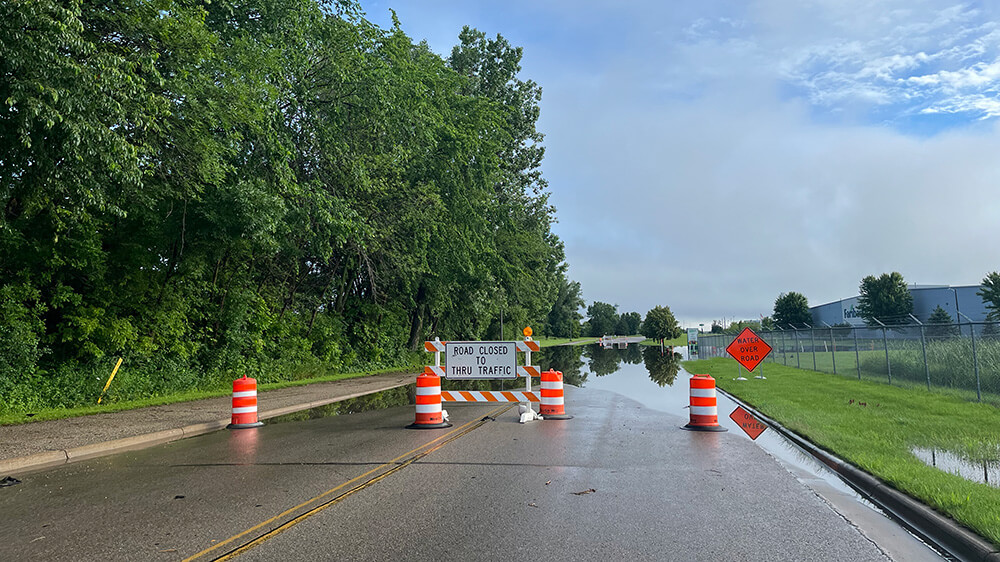
Though flooding is a little less likely this year, because of the low volume of snow, severe rain can bring flash flooding, and flooding poses unique challenges for rural people, the foremost being how to get to safety when roads have become impassable. Planning several routes to your shelter can keep you safe from bodily harm and accident.
“What we often see in flooding events is the loss or degradation of gravel roads,” Reed advised. traditionally in Minnesota, the snow melt causes some flooding. Culvert washouts are among the most serious problems. Even when a road surface appears intact, if there is fast-moving water coming through, the culvert under the road may be gone, making it extremely hazardous to drive over. Culverts can wash out pretty quickly. It’s good to have an alternative, in case your evacuation road was washed out. Where would you go? What’s your alternate route?”
For more information about how to prepare for severe weather, including checklists and videos, go to the Minnesota Department of Public Safety website.