MN Ag in the Classroom celebrates 40
Written by Jonathan Eisenthal
The numbers are in, and in its 40th year, Minnesota Agriculture in the Classroom (MAITC) is reaching more students and teachers than ever before.
Program impact is up 7%, with an unduplicated student impact number of 169,553 students, which is almost 18% of the estimated 951,734 students in Minnesota, in public schools, private schools and in home school.
“This team is truly exceptional in its determination to help educators infuse agriculture into their classrooms,” said Ann Marie Ward, executive director of the MAITC Foundation. The MAITC team, in addition to Ward, includes Minnesota Department of Agriculture educational specialists Sue Knott and Keri Sidle, two resource specialists employed by MAITC Foundation, Sarah Kuschel and Jessica Petroske, and the director of the Farm Camp program, Brandi Wulkan, also employed by the foundation. It is a true public-private partnership.
“Our goal at Minnesota Agriculture in the Classroom is to provide exposure to opportunities, cultivate curiosity, and introduce careers beyond the farm,” Ward said. “We are seeding a knowledge base for educators to bring agriculture literacy to their classrooms, schools, districts, and communities.”
Among the many resources MAITC provides, pride of place is held by AgMag, a full color multi-page reading and activity booklet, published twice a year, in editions that gear themselves to the different levels of comprehension of K-6 students. This year MAITC distributed more than 100,000 AgMags.
MAITC also offers an online clearinghouse for lesson plans that use facts, figures and human-interest stories drawn from agriculture to teach science and technology, history, and the gamut of academic disciplines. The program reached 5,000 teachers this year, with these lesson plan resources, and with experiences like farm tours. This number of contacts represents nearly 7% of active teachers in Minnesota.
Minnesota Department of Agriculture’s commitment to the MAITC program remains as strong as ever, according to Paul Hugunin, Director of the Ag Marketing and Development Division at the MDA.
“I was just at an event last night with (representatives from agriculture departments at) 14 states from around the Midwest, and western United States, and when they learned about the role that the (Minnesota) Department of Agriculture has in (Minnesota) Ag in the Classroom and Farm to School in general, they’re shocked, they’re blown away, and they’re very jealous.”
Thom Petersen, Commissioner of Minnesota Department of Agriculture, gave a long list of praises for the MAITC program during its 40th annual meeting. Among them he emphasized the many different ways MAITC reaches out.
“The virtual field trips are a real home run,” Petersen said. “I have so many people tell me how important an option that is.”
The virtual field trips can be accessed by Zoom to allow interactive experiences for students and teachers, but they also offer streaming via YouTube to ensure everyone can experience a farm via the Internet. One example of the many virtual field trips offered by MAITC took place a few days after the annual meeting. Luke Warmbold hosted a video tour of R.D. Offutt Farms, one of the leading potato producers in the region. Students not only got an insight into the origins of one of their favorite fast-food treats—they heard that the storage building at Offutt’s held the equivalent of 65 million medium sized servings of French fries. Now the students will connect French fries to the hundreds of other tasty ways potatoes can be prepared. Overall, virtual tours like this create a positive connection to farming, excite curiosity about how food is made and plant the seeds for students to think of careers in food and agriculture.
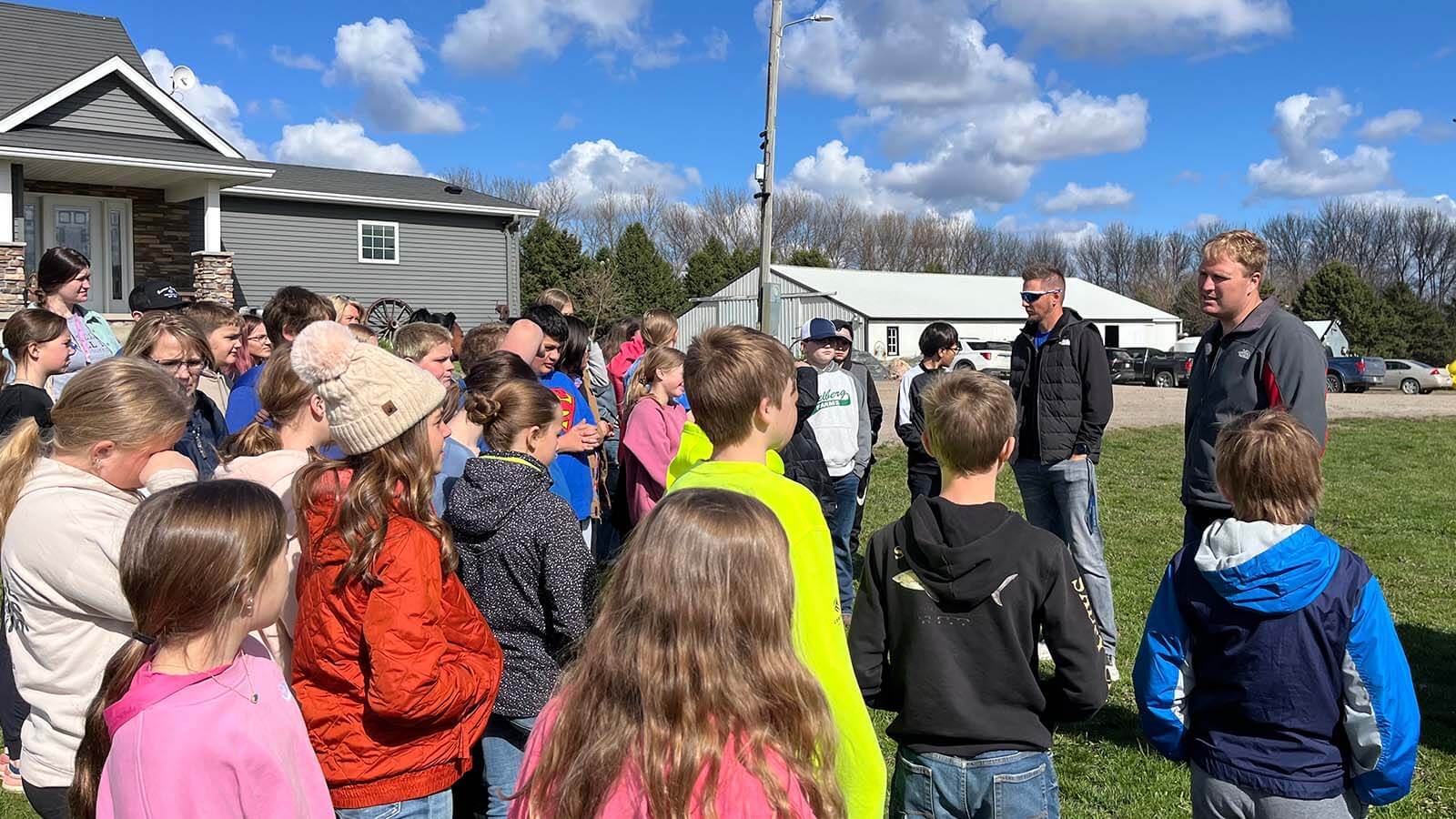
One of the most immersive student experiences MAITC offers is Farm Camp Minnesota.
“This year,1,031 students that were impacted by Farm Camp throughout 15 different experiences, which included 25 schools, 35 educators, 41 ag host locations, and even more ag hosts participating at events,” said Brandi Wulkan, director of Farm Camp. “(We offer) a three-part experience. In-class lessons that meet academic standards to give students some background knowledge before they visit the farm or ag business. Part two is the actual experience at the farm and ag business. And the final part of Farm Camp is the career lessons after they return to school. Something that our ag hosts share repeatedly is that students are asking more and better-informed questions when they arrive at the farm.”
Minnesota Agriculture in the Classroom has been supported by Minnesota Corn for 35 years, and this past July, Minnesota Corn was a sponsor of the Growing Minds Conference, organized and co-hosted by Minnesota and Wisconsin Agriculture in the Classroom, which brought educators from Wisconsin and Minnesota to learn about the latest ways to incorporate agriculture learning into their classrooms.