Using an enzyme to stop the spreading of plant disease
Mike Sadowsky
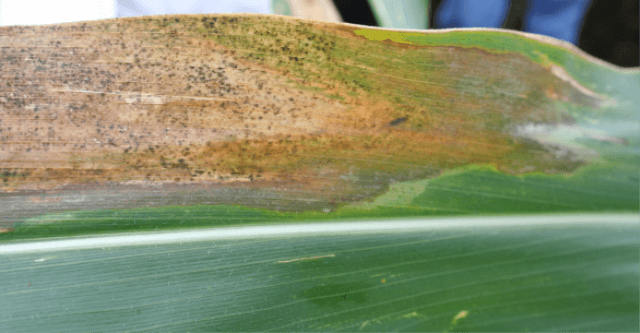
The lactonase enzyme is commonly occurring. With a small genetic tweak, it could start a revolution in agriculture by replacing chemical crop protection treatments in a way that arrests the evolution of bacteria that cause plant infection, according to Sadowsky.
Diseases like Goss’s Wilt are caused by bacteria. As part of its reproductive cycle, bacteria create a biofilm that allows them to communicate to other members of the colony when they should reproduce. In the case of Goss’s, this leads to large lesions forming on the corn leaf, to devastating effect on the plant’s ability to thrive. Losses on the order of 60 bushels an acre have been recorded.
The standard treatment for Goss’s Wilt is fungicide. While this can be very effective, it also can accelerate the process of evolutionary selection, and lead to the development of bacteria that are resistant to the chemical control.
Sawdowsky and his team are using an enzyme that shuts down the communication among the bacterial cells. The biggest takeaway is that this technology does not kill the bacteria, so it doesn’t allow for that selection process to occur, which is how antibiotic resistance happens.
The root of the idea came when scientists examined fields where bacterial infection was present, and then tested plants that remained unaffected. The Lactonase enzyme, produced by bacteria themselves, appeared to be the common denominator.
Sadowsky’s team is engineering the enzyme so that it could be used on corn, as well as soybeans and potatoes. It also degrades naturally in the environment, making it safe.