Lessons Learned, Growing Together: farmers navigate a pandemic year

We all know the past 15 months have been like no other for our fellow Minnesotans, and people across the world.
Now, as life returns to normal, Minnesota Corn checked in with farmer leaders, the next generation in agriculture, and MCGA staff as we acknowledge the past and look to the future.
Interviews by Jonathan Eisenthal and Nate Gotlieb
“We had never dealt with anything like that in our lifetimes.”
Jim O’Connor, farmer and past chairman, MCR&PC
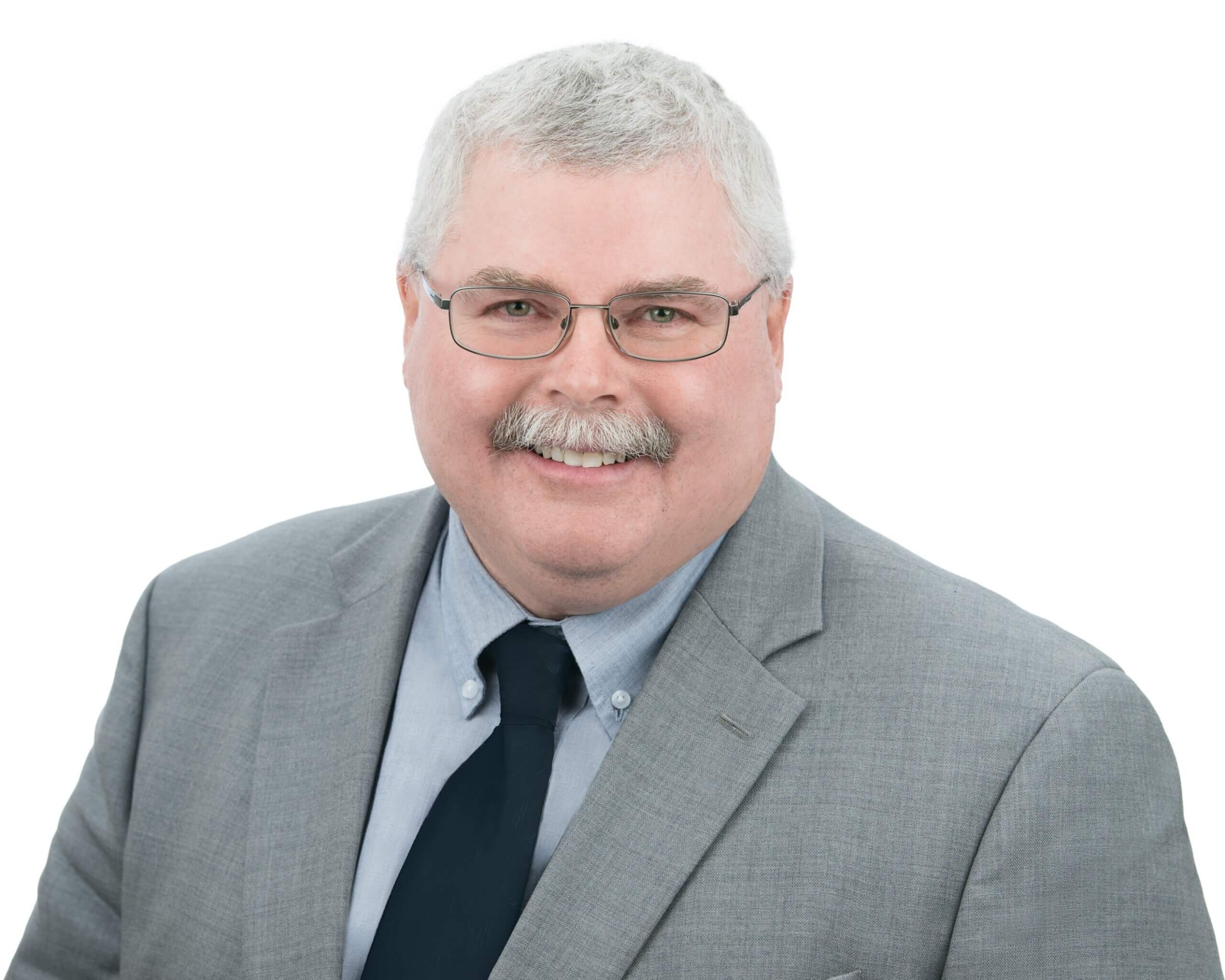
At the onset of the pandemic, I would say that one word sums it up: fear. Fear for not only our own health, but also wondering, “What the heck is going to happen, and how is it all going to turn out?”
We raise finishing pigs, as well as corn and soybeans. Back in March 2020, just the luck of the timing, we had actually [delivered all of our pigs], and our barns were emptied, waiting for the next bunch. Then, the packing houses shut down because the virus was spreading among the workers. It was unclear how long they would be down. There were friends and neighbors in the business [with nowhere to send their pigs] who were really hurting, and they’re hurting to this day. We went without payment for a month, but when things picked up, the honor and integrity of the people we work with — they made up for what we missed. We were made whole.
Looking back over the course of the pandemic, I see how fear turned to concern, and the concern turned to awareness. We had never dealt with anything like that in our lifetimes. I was thinking about the polio outbreaks past generations dealt with, and I think — just like then — “Thank God for the vaccine.”
I have an elderly mother. She was under quarantine in Arizona. She remembers as a little girl how her mother had gotten scarlet fever and she was quarantined to her bedroom. Their house was quarantined, but not the entire neighborhood, so it’s been hard for my mother to get her mind around COVID, with everyone needing to stay socially distant.
My son and my son-in-law and some employees, we all work together on the farm. At the outset of this, I sat everyone down, and I gave everybody the option. I said, “We are going to talk about this. We are going to deal with this as a group.” And we talked about limiting our (social) circles, our exposure. “If any of us are feeling sick, for God’s sake, don’t get the rest of us sick,” I said. “We have a crop to put in, but this thing is serious, and so we are going to take it seriously. What you do in your personal lives can and will affect us.”
I involved the employees and family members in every decision along the way. I wanted their input. The one guy summed it up really well. He said, “I didn’t come to work here so I could sit at home.”
We were able to socially distance ourselves in tractor cabs, and we got the crop planted, and in the fall we harvested.
“I think everybody learned to adapt.”
Tim Waibel, Farmer and President, MCGA

When I flew out to Washington, D.C., on a Sunday early in March 2020 [to meet with congressional leaders], COVID was in the news, but it wasn’t a big deal. By Wednesday, it was like everybody had that fear in their eyes as to the uncertainty of what this was. When we flew back on Thursday, it was just a totally different experience at the airport, as far as people trying to distance.
On the farm, although COVID probably changed the structure of going to meetings, going out to eat and visiting with friends, things had to continue. We had livestock, and they needed to be taken care of every day. From that perspective, it didn’t change at all. Although for the first time in my life, I didn’t have to watch for traffic when I drove onto Highway 14. I’ve lived right on the highway for decades, and I have never seen traffic that light.
When traffic levels fell like they did, ethanol production declined, and that had me a little scared. China came into the market [in summer 2020] and started buying grain. But I think a lot of people, myself included, didn’t think we would sell for these elevated prices, with the demand being lost for ethanol. It just goes to show how important it is that we continue to work on trade issues. Transportation is also part of the trade issue, because we still need infrastructure to get the product to market.
With Zoom meetings, it’s kind of funny: by the time we get somewhat comfortable with it, we’re moving back to in-person meetings. The one thing about having in-person meetings that’s nice is you can judge a lot of other peoples’ feelings based on facial expression. You can’t judge that by Zoom.
[As MCGA], we always did a good job during COVID advocating up at the State Capitol. When you take away that in-person meeting, you can’t have that one-on-one time, which presented its challenges. But I felt luckier than some, knowing that I’ve been with Minnesota Corn for nine-plus years and have gotten to know some folks up at the Capitol. Overall, never in my lifetime did I think I would experience something like this. All in all, farmers have to adapt to the weather and a lot of things brought forward every year. COVID was just a little bit bigger, but I think everybody learned to adapt.
“Our day-to-day life didn’t change much.”
Carson Kahler, Student, MCGA Young Adult Member

As far as our experience with COVID, [my family] was really lucky. We were exposed to one of the first confirmed cases in Minnesota. Someone that we do farm business with, we went into his office to talk through purchasing supplies. A few days later, we got a text from him saying he wasn’t feeling very well. And then a few days after that, we spoke with him and he said, “Yes, I got tested, and I am positive.” Nobody in our family got sick from that contact. In the middle of this winter, both my brother and his fiancée got COVID, but it was not a terribly serious case. Out of our whole family, that was it.
Our day-to-day life didn’t change much. With a family farm, it’s a small number of us, and we see each other every day, so we just kind of went about our normal activities there. I went back to college in the fall [at South Dakota State University], and even though we were in person, we were still required to wear a mask and to social distance when possible. [We had classes] in the big auditoriums where there were rows that kind of went up like a staircase. Between each level, there was a layer of Plexiglas. The kids at the very back of the room had to look through six layers of Plexiglas to see the projector screen at the front of the room.
Probably the hardest part was that a lot of our professors like to build student interaction into the lecture session. “Talk with a partner,” they say. When your partner is sitting halfway across the room, it doesn’t work very well.
I am going to be vice president of our Ag Systems Technology Club, and we’re hoping to bring back activities, such as speakers who work at the big ag corporations. It’s an important way to make industry contacts for your career. When COVID hit, all these companies put in policies that they couldn’t send people, and we couldn’t tour their facilities.
When [COVID-19] first started and nobody really knew anything, I was definitely worried for my grandparents. Grandpa would call and say, “Hey, I want to come over,” and we would say, “Sorry, we don’t want you to come over, grandpa. We don’t want to accidentally expose you to the virus.” For my grandparents’ safety, we haven’t had any holiday celebrations since Christmas 2019. I haven’t seen my cousins. My aunt works at the hospital, so she never wanted to come down, and she’s with all my cousins, so they never wanted to come down and possibly expose Grandma and Grandpa. We are really looking forward to being able to see each other again.
“It’s a joy to be back working in person.“
Adam Birr, CEO and Executive Director, MCGA

When you talk to the grower-leaders, their day-to-day really wasn’t impacted [by the pandemic], because so much of what they do is isolated. Where they were impacted was when the markets were fluctuating early on, particularly with the livestock crunch. Organizationally is where we probably felt the impact the most. Agriculture is so much about relationships and networking, and that was severely disrupted. But I think we adapted really quickly and really well, too.
During the pandemic, as executive director, you feel a little bit of the weight of being responsible for the well-being of the staff, both financially but also just their overall well-being. There’s a responsibility I think that comes with being a leader of an organization. You want to also be a caretaker for everybody involved, and I know that’s important to the grower-leaders as well. The relationships that were there before the pandemic just got us through those crisis moments.
With the market fluctuating as it was in spring 2020, you focus on the things that you can control. You really up the communication. I think that provides assurance to the membership, to the board and to the staff that you’re actively working on these things. Also, you look at things that show some promise, highlighting the continued work we’re doing around new uses and finding new markets. Even now, we don’t let up on the gas of continuing to find long-term markets.
Not seeing my colleagues from other states and from other commodity organizations in Minnesota was challenging, because we share a lot of the same experiences, just in terms of the nature of the job. We did calls and some virtual happy hours with the state corn execs, which was nice. It was good to hear that even those of us who have been doing this for 20-plus years were dealing with some of the same struggles as those of us who are newer.
From a staff perspective, with the new staff that we have, it’s a joy to be back working in person. Not that we weren’t working together before, but boy, I’m just really enjoying the camaraderie and being back working together. I’ve enjoyed seeing people and the things you get outside of the business meetings and so forth.
I’m proud that we not only just got through the pandemic, but we really did, I think, thrive. We picked up some things that will serve us well into the future. Not that I’m looking to endure it again, but there were a lot of good things to take away from it, too.
This article originally appeared in the July 2021 issue of Corn Talk, the official publication of the Minnesota Corn Growers Association. Read the full issue here.