Farm tour brings irrigation into focus
Written by Jonathan Eisenthal
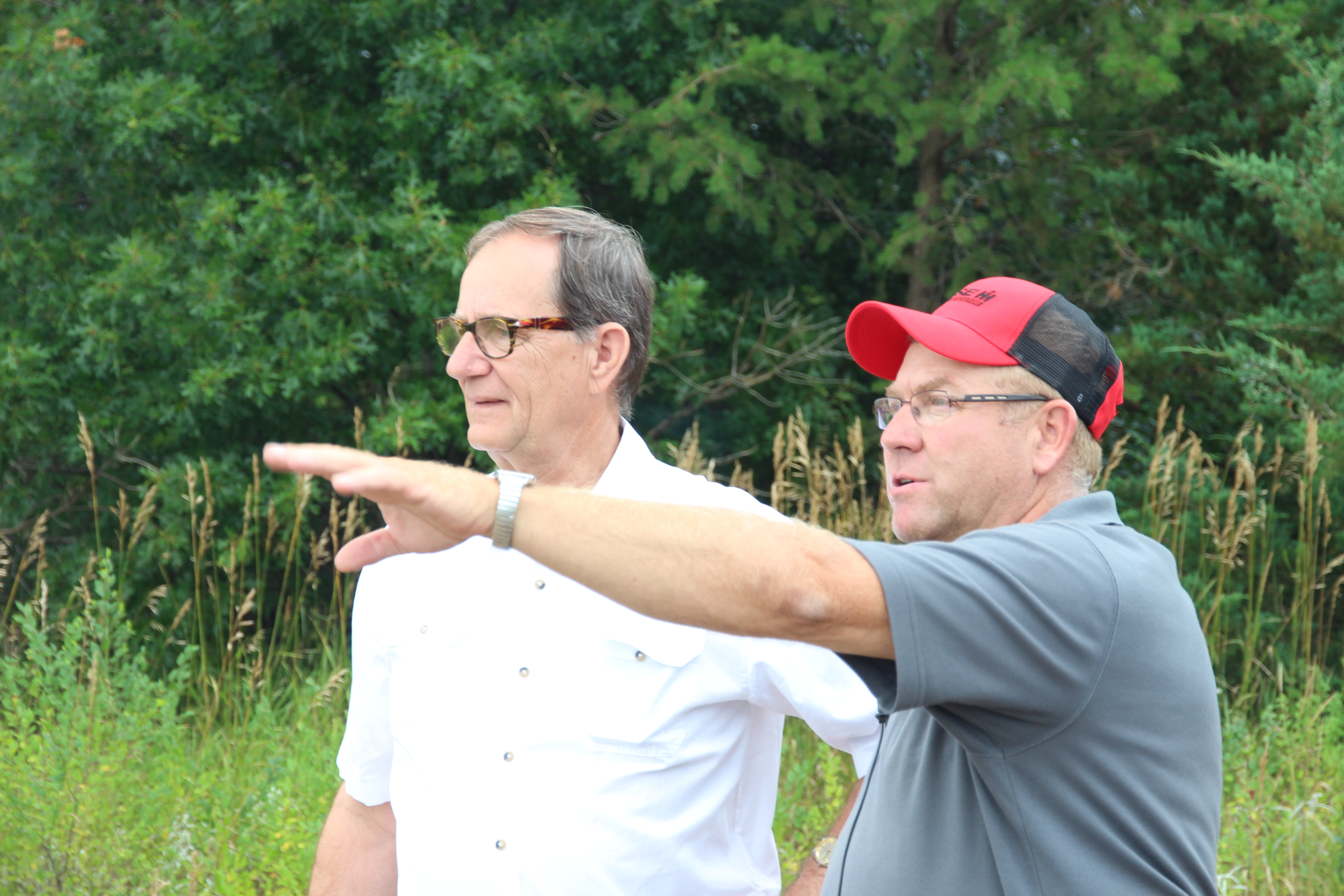
Farmer Alan Peterson hosted two dozen guests, including Minnesota Agriculture Commissioner Dave Frederickson and Assistant Commissioner Matt Wohlman in a tour of area farms near Clear Lake last week to show the theory and practice of irrigation in Minnesota.
Irrigators are responsible stewards of water and land resources, Peterson told the assembled group. The tour demonstrated that irrigation is an economic necessity in the central region due to its light, sandy soils. The handful of stops looked at acres devoted to corn, edible beans and potatoes, also demonstrated state of the art irrigation technology and its trends towards greater efficiency in the use of water and power, as well as nutrients and other inputs crops need.
Peterson started farming in 1977 with his parents. Currently, he and son Ryan raise corn, non-gmo soybeans, seed corn and dark red kidney beans. They also feed 300-400 steers.
At the first stop on the tour, Peterson showed dark green, irrigated corn, easily ten feet tall and very close to maturity at the end of August. Peterson raises crops on 1,500 irrigated acres, with an additional 150 acres set aside for dry land corn.
When the bus pulled up at the dry land corn field, the group saw spindly, yellow-green plants barely three feet tall. In typical years, Peterson said, this dry land field might offer 50 bushels of corn per acre. This year, if he would bother combining it, he might get about 15. Often, Peterson chops the plants, corn cobs and all to make silage for feeding cattle.
Asked about the economics of irrigation versus dryland, Peterson offered the quick calculation: on the dry land acres, at 15 bushels per acre and four dollars per bushel, he grosses $60 dollars per acre. An irrigated acre, which yields around 200 bushels means a gross revenue of $800 an acre.
Many of the fixed costs are the same for the two different types of acres: seed, nutrients, pesticide and herbicide. Irrigation does involve major equipment costs and electric power costs, but the difference in margins in the rough calculation shows the necessity of irrigating.
One tour-goer said: “I’m excited to see the new center pivot Alan put up that has chem-valves for injecting pesticide and fertilizer. As long as the pivot’s going around, you may as well get dual use by putting your fertilizer through it. Especially with nitrogen, you’re spoon-feeding it to the crop, giving it to the crop when it needs it, rather than all at one time. It’s a best management practice that’s very good.”
Peterson showed off the equipment, noting the release valve that opens when the system is shut down or loses power prevents back flow of chemicals back into the well.
Peterson also noted that they only pump the amount of water they need. At the third stop in the tour, the leaves on the dark red kidney bean plants have turned yellow, signaling they are ready for harvest. There, they only pump a little more than a hundred gallons per minute in order to properly water the crop. Peterson estimated that on an average 40-acre field, his system draws about 500 gallons of water per minute.
Commissioner Frederickson made these observations in the midst of the tour: “I think we don’t tell our story loud enough. and let’s say, enough times. So I am really appreciative of Alan and his family and the industry, to show us what they are doing. The efficiencies they have been able to gain, particularly with the new equipment they have and the way they manage these systems, I really appreciate seeing that, and talking about what does the future look like for irrigators.”
Federickson continued: “New changes in technology are coming about that will allow it to use less water, use less energy. That’s what people across the country are recognizing. We have to balance all of this: food production with economic interests, environmental issues…that gets us back to telling our story. This is the beginning of communicating, telling our story. I think this is good.”
The tour group included members of the media, professors and researchers from the University of Minnesota, as well as officials from state government. Peterson and his son Ryan, who farms with him, presented their experiences with irrigation.
Irrigation industry professionals from Grand Irrigation, Inc, located right in Clear Lake, and West Central Irrigation in Starbuck, raised points as well and answered technical questions from the tour group.