FFA award spotlights deeper knowledge of crop production
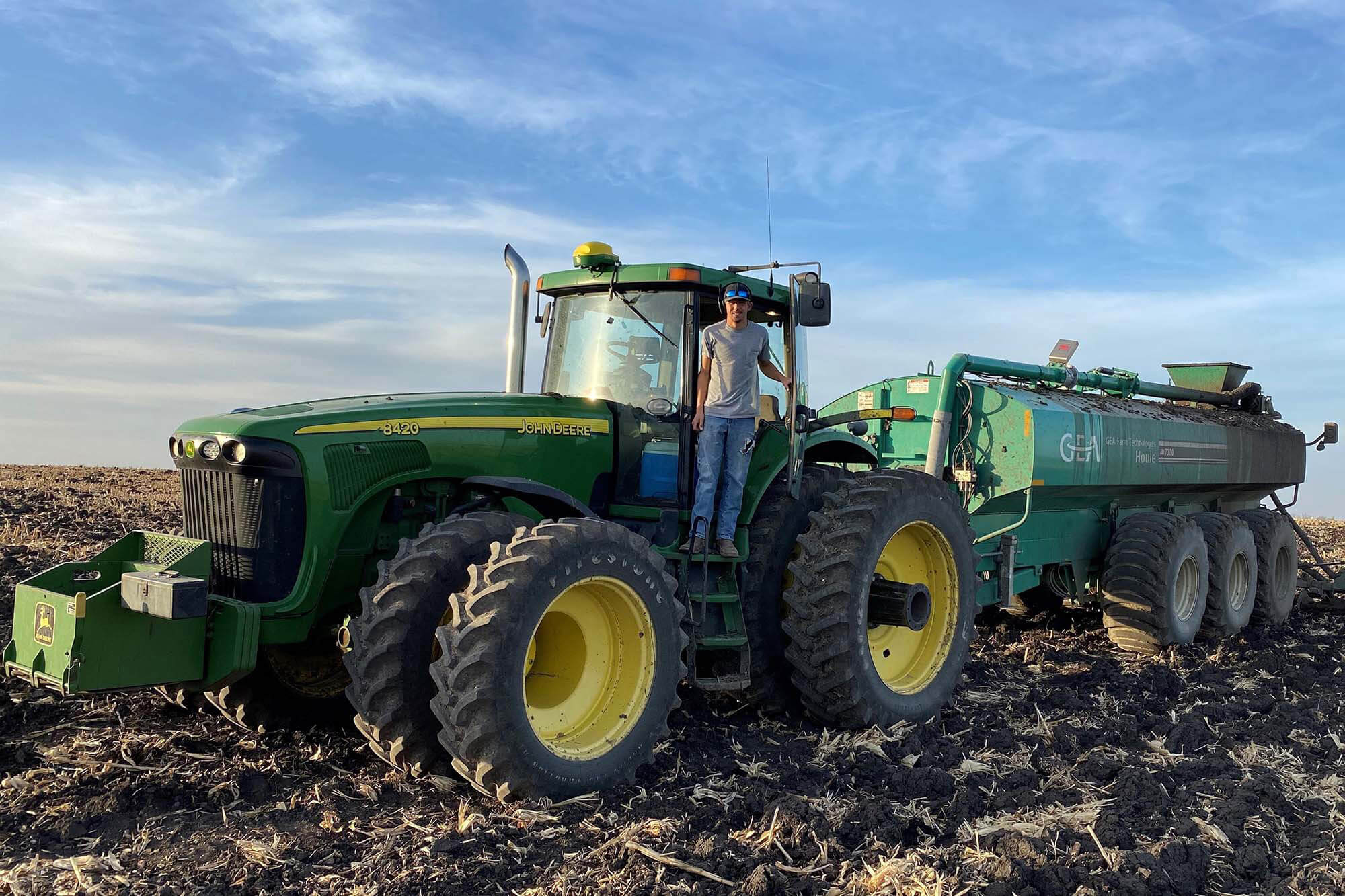
As part of its mission to engage youth and develop the next generation of farmers, Minnesota Corn proudly supports the state FFA organization. Part of this support goes toward sponsorship of proficiency awards for students who completed a Supervised Agricultural Experience focused on crop production. At the state FFA convention in April, Mason Stevermer was recognized as the first-place winner of the Diversified Crop Production — Placement Proficiency Award. Below is his story.
Written by Jonathan Eisenthal
On May 6, Mason Stevermer headed out with his dad and uncle for the first day of planting on their farm in Easton, Minnesota, just a little way north of the Iowa border. Unfortunately, it was a very late start for planting corn in southern Minnesota.
But still, Mason was excited and happy to be getting started, and he had a few more reasons to feel upbeat: May 6 was his 19th birthday, and it was also just a week after he brought home the plaque from the Minnesota FFA convention, taking top honors in the Diversified Crop Production category.
His winning project was a thorough write-up of all the jobs he does on the farm, and how these roles fit into the larger picture of “the whole process from putting the seed into the ground to bringing the harvested crop back to the bin,” Stevermer said.
On that first day of planting, he tended the planter, bringing seed and inputs to the field whenever the tanks needed a refill.
He is excited at the prospect of going to the National FFA Convention in the fall to present his project.
Adam Birr, CEO and Executive Director of the Minnesota Corn Growers Association, presented the Diversified Crop Production Award at the Minnesota FFA Convention on Monday, April 25. Kyle Hagen of Glencoe-Silver Lake High School took second place, and Eric Melberg of Atwater-Cosmos-Grove City High School took third place.
Stevermer is currently a first-year agriculture student at North Iowa Area Community College. He’ll complete his program at the end of next year, and then he feels he’ll be ready to handle the planning and financial decision making needed to rent some of his own farm ground and produce crops. His plan is to continue to help at the home farm and take an ag-related outside job while he grows his farming operation.
Stevermer credits the guidance of Dan Dylla, his ag teacher at United South Central High School in Wells, for helping his project succeed. “Mr. Dylla has always helped us out with these projects,” Stevermer said, reporting that each year in FFA he would develop two or three projects, to increase the chances of taking the top spot in at least one category. “He helps us decide on the project and then he leaves us alone to do it. If we have questions, he will help us along the way. But he always tells us, ‘It’s your responsibility, just get it done.’”
The FFA crop-production project must reflect real understanding of all the processes involved in producing and marketing crops. Lately, Stevermer has joined in sessions when seed dealers visit to talk with his dad and uncle so that he can understand the prospective choices they are offering. But Stevermer also thinks the opportunities he has had to work at various neighboring farms have really helped deepen his knowledge, too.
“Working for the neighbors around us, you learn that everyone does things just a little bit differently, Stevermer said. “I’ve learned a tremendous amount that way, and then you learn even more when you put it together in a written project like this. It makes you think more deeply about it, and you comprehend it better.”
In the fall, Stevermer takes part in hauling and injecting manure from their farrow-to-finish sow business, adding fertility to fields where it’s most needed. He also drives the grain cart alongside the combine during harvest and drives a semi to drop loads of corn at the local ethanol plant. When the crop is in the bin, they are still not done, of course. Since the Stevermers strip till all their acres, this means going out after harvest to make a pass with the machine that cultivates the strip and places a band of fertilizer in the soil, so that next season they can come out with the planter and get started right away.
To learn more about Minnesota Corn’s support of agricultural education in the state, visit mncorn.org/outreach.