Meet the new MCGA and NCGA presidents

On Sunday, Madelia farmer Harold Wolle became president of the National Corn Growers Association (NCGA), and Eyota farmer Dana Allen-Tully became president of the Minnesota Corn Growers Association (MCGA).
Wolle, who raises corn and soybeans with his son, Matt, is the second Minnesotan to serve as NCGA president in as many years. This past year, Eden Valley farmer Tom Haag served as NCGA president. Meanwhile, Allen-Tully, who operates a dairy and crop farm with her parents and brother, took over the MCGA president from Richard Syverson of Clontarf.
Below are Q&As with Wolle and Allen-Tully about their background in farming, priorities for the year, and more.
Wolle: ‘We need to be actively involved if we want our voice to be heard’
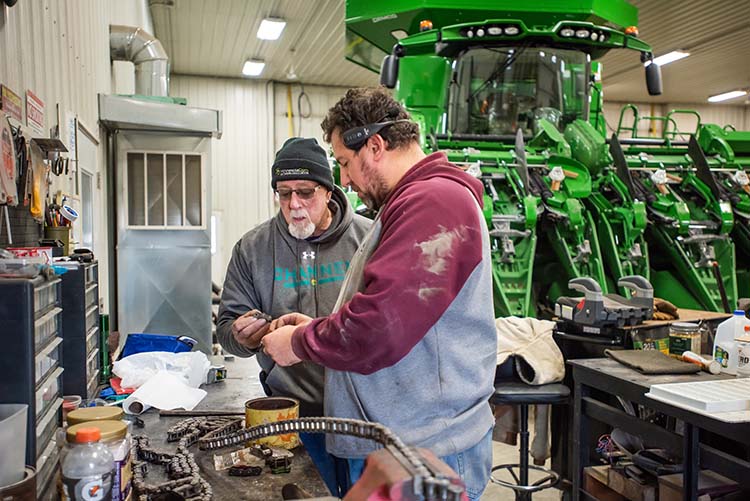
How long have you farmed?
I’ve farmed for 47 years, all in Madelia. When I came home from college, I was able to buy a farm that has served as our home base. I also have farmed my father’s farm, which has been in my family since 1883.
Was farming something you always wanted to do?
Pretty much. I had another job right out of college. I have a need to be productive, and in that job, I couldn’t see the results of my efforts. On the farm, if you work hard, you can see the results of that. If you don’t get your work done, you see the results of that too.
What do you enjoy about farming?
It’s enjoyable to see those little plants come up in the spring, but fall is my favorite time of year. At that point, we’re eagerly anticipating what’s out there. Is it going to be a pretty good crop, or are there going to be some disappoints? It’s a little suspenseful at the moment, but we’re going to find out in the next month.
Is it fun to farm with your son?
It’s one of the most enjoyable things of my career.
What inspired you to get involved with the National Corn Growers Association?
My experiences on the Minnesota Corn Growers Association Board and serving as president of MCGA. (Editor’s note: Wolle joined the MCGA board in 2012 and served as its president in 2016-17.) That level of being involved just piqued my interest. I was asked to run for the NCGA board and decided that it would be a good opportunity and have thoroughly enjoyed serving on that board as well.
What have you liked about being on the MCGA board?
We have so many issues both on a state and national level that we need to work on. As corn growers, we are such a minority of the population. We need to be actively involved if we want our voice to be heard and to make a difference when policy decisions are made.
What are you hoping to work on at the national level?
The Farm Bill expired Sept. 30, and that creates a sense of urgency that raises it into the number one priority at this time. Number two are issues surrounding demand for corn: Ethanol, livestock production, and trade. On the ethanol front, there’s probably three issues that rise to the top. First off is year-round E15. We need to get that authorized. The way it was working this summer, I don’t think it’s sustainable where the president is giving a waiver every 20 days. We also need to get the Next Generation Fuels Act passed, which would pave the way for higher blends of ethanol in our gasoline. As we add cosponsors, it’s going to be more difficult to ignore the fact that there’s a number of legislators that want this to go forward. The third thing is sustainable aviation fuel. I think we’re going to hear a lot more about ethanol-to-jet as we move forward. There are some opportunities with corn—with its lower intensity scores—to be used as SAF in the near future. Airlines know they have to reduce the amount of carbon they’re emitting, and this is the most practical way for that to be accomplished.
What do you see NCGA’s role as in making those things happen?
We need to keep the pressure on our champions in Congress so that they keep advancing these pieces of legislation through legislative process.
Are you feeling optimistic?
We have to have optimism that we’re going to get these pieces of legislation passed. They’re essential for building demand for our corn. We have a two-billion-bushel demand projected. We are so fortunate in this country that we can produce more corn than we actually need. We need to increase the uses for corn, and we need to increase our exports. We need to be generous with our corn around the world.
How do you see this role that you’re going to be in?
It’s multifaceted. Communication, just what we’re doing right now, is one focus. Being an advocate in the policy arena is two, and three, there’s a number of administrative issues that I’ll be involved in throughout the year.
Anything you’re most looking forward to in this role?
Policy issues are what I most enjoy. This spring, I was able to testify in front of the U.S. Senate Subcommittee on Commodities, Risk Management, and Trade, and thoroughly enjoyed that opportunity. I’d love to be on stage when the president signs the Farm Bill.
Allen-Tully: ‘Agriculture has a great sustainability story to tell’
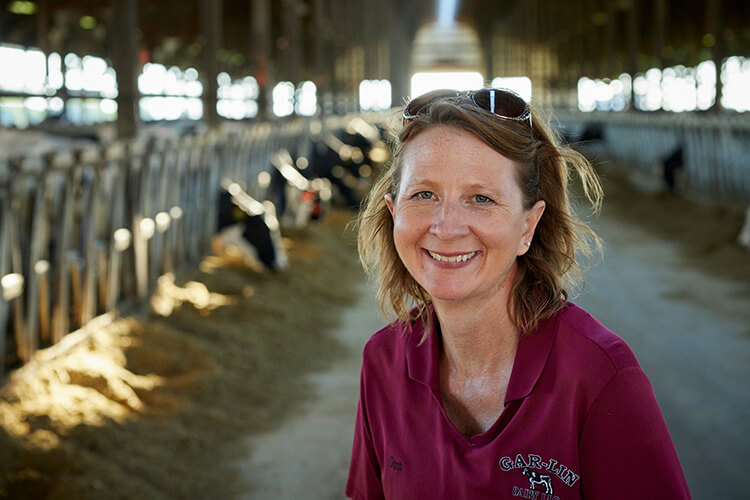
Tell us about your farm.
We have a dairy farm and we also grow all our forage and corn for the cows. We grow alfalfa, some soybeans, and we do canning crops—sweet peas and sweet corn. We are doing cover crops. And then we have corn, and we harvest our corn in the form of dry corn, high moisture corn, or corn silage. A portion of our corn is a cash crop, and all of our soybeans are also a cash crop. I farm with my parents, who are retiring, and my older brother. And, we just brought in two new owners who are not family members, but who are going to be our next generation. They will be partners, but right now they are just getting their feet wet.
My grandfather bought this farm in the 1950s. My dad grew up here, and then my brother and I grew up here. I have been back since 2003. I did a lot of schooling: I have an undergraduate degree in farm business management, and then a masters and PhD in ruminant nutrition, with a focus on dairy. After that I was a fellow for the Federation of Animal Science Societies in Washington, D.C., for one year.
What do you love about farming? What do you find to be the most challenging aspects of it?
What I love about farming is that I get to work outside every day, and every day is different. Which is good, and bad, because you have different challenges and you get to solve different problems or have different rewards. Watching something that you planted, or delivered as a newborn calf, and watching those things grow and prosper is really the reward for farming. Another reward is having employees who decide to spend their career with us and watching them grow and figuring out together what we can do together to make it a rewarding venture for all of us.
The challenges can be the same things. This year we are in a D-3 drought in my farm area, so the weather has been our challenge. We don’t have irrigation, so we are just kind of watching our corn die in the field. We’re just hoping we will still be able to meet our forage needs and feed our cows. And I think we will. It’s just that we won’t have the cash crop to sell that we usually would. If we have a disease that goes through the animals that can be a challenge, watching how that impacts them. It can be an emotional struggle for me.
Do you have particular issues or goals that you would like to pursue as a grower-leader?
Agriculture has a great sustainability story to tell. It is a goal of mine to help every corn farmer embrace this concept. Our non-farming neighbors do not know the details we are already implementing to protect our soil, water, and air. I am really excited about the potential of sustainability best practices have to address the concerns of our consumers, legislators, and regulators.
Who has inspired you by their example? What did you find inspiring about them?
My parents, Gary and Linda. They have built a successful farm business that we are able to be a part of, and they have given their kids who wanted to come back an opportunity to follow in their footsteps. My dad was involved outside of the farm, too. He was on the governor’s Generic Environmental Impact Statement Committee back in the late 1990s that was setting rules for feedlots in the state of Minnesota. There was a working group convened by the State Legislature that included members of all the different interested groups — there was an environment member, a water member, a public health member and he was one of the ones on the agriculture side—he might have been the only farmer. He understood the need for us to be involved in agriculture, and to fight for what we need from a policy perspective or a regulatory perspective to be successful.
What is something about farming that might be surprising to the average consumer?
The amount of technology in farming today, and all the education it takes to put all those pieces together.
How do you like to spend free time? Do you have hobbies; play a sport; like to travel?
We love travel. We love new experiences. My husband and I don’t have children and so we are open to opportunities that we haven’t experienced yet. We just did an event where we went up to the NHRA drag races at Brainerd International Raceway. I had never been there before. It was amazing. So much fun to watch people who are passionate about what they do and who excel at it. Our next trip will be to the Kentucky Derby.
Why is it important to you to participate in the Minnesota Corn Growers Association/Minnesota Corn Research & Promotion Council?
I have a ton of respect for the corn growers organization and everything that it represents. During my time as a fellow in Washington, D.C., I watched the grower-leaders interact with us as staff or with other legislators, and I saw their effectiveness at participating in policy changes, or helping farmers get through red tape, or deal with legislation that is going to impact us in the future. I think the corn growers have a fantastic reputation of being an organization that is looking for solutions to problems.