5 takeaways from Gov. Dayton's public meetings on buffers
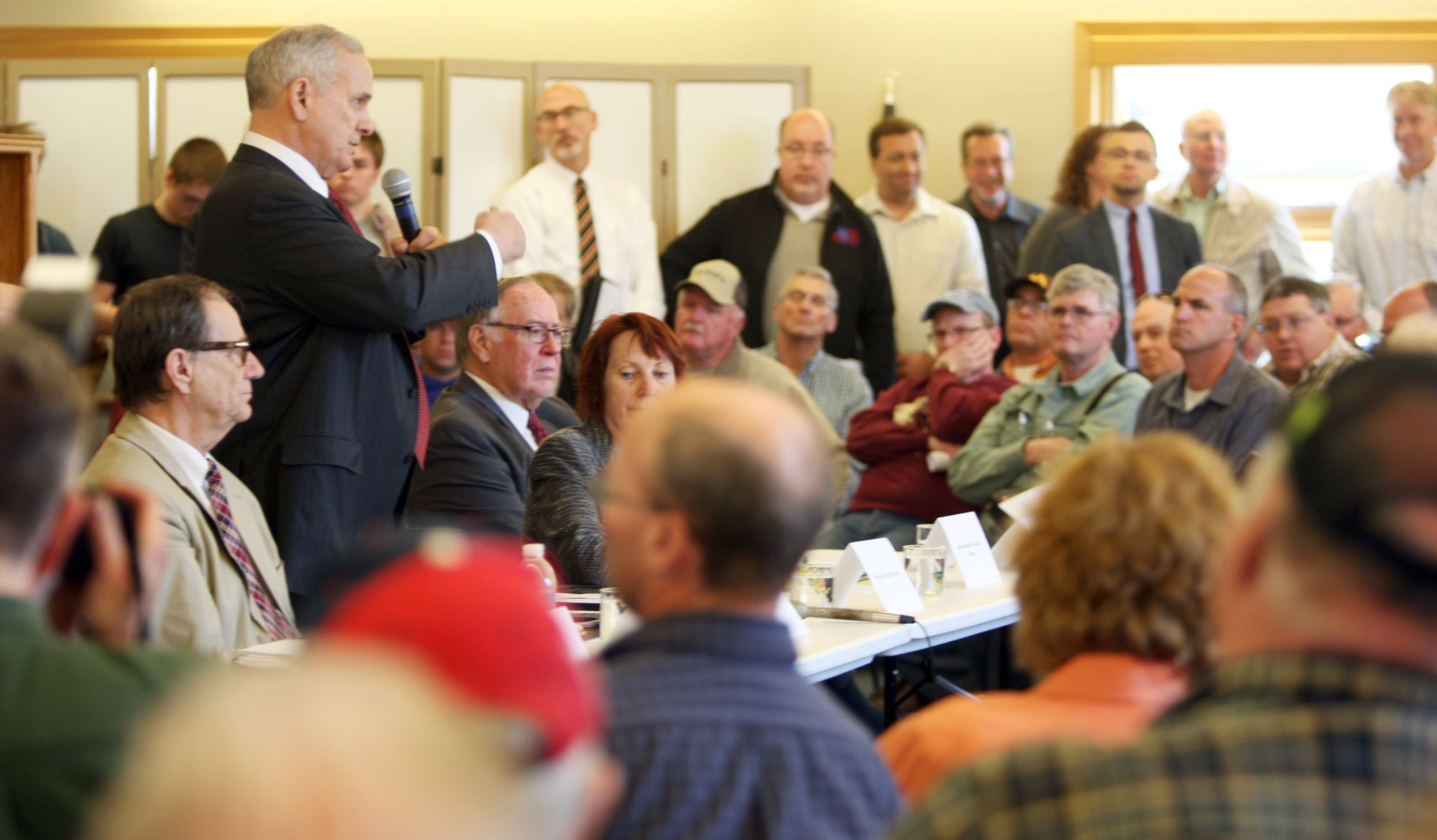
Governor Mark Dayton visited Worthington and Austin on Thursday to hear feedback from farmers and local leaders on his proposal to require 50-foot buffer strips along all Minnesota waterways.
About 400 people packed both meeting rooms to weigh in on the issue. If you weren’t able to attend, here are five takeaways from the meetings:
1. Farmers want partnership. Comment after comment from farmers and other stakeholders wondered why the governor didn’t invite farmers to the table to discuss possible solutions before revealing his buffer proposal at a pheasant summit in the Twin Cities in January. Some of the rhetoric used by the governor to sell his proposal, such as asking farmers to “look into their souls” and accusing farmers of “creating cesspools,” was also called into question.
“I wish you’d come to farm groups before you went about this the way you did,” a farmer said at the Worthington meeting. “Farmers do look into their souls.”
Dayton acknowledged he could have maybe approached the issue differently. He also committed to getting farmer-led groups together to address the issue.
2. Governor wants action soon. While Dayton appeared to be open to partnership and a more collaborative approach on buffers and water quality, he made it clear that he wants something to happen soon.
“I’m not going to say ‘let’s study this for two years or 10 years,’ then we come back and nothing has happened,” Dayton said. He referred often to a recent MPCA report that said only three of 93 streams and lakes in Southwest Minnesota are swimmable, and a story in Thursday’s Star Tribune about drinking water quality in Adrian.
“Kids can’t swim, people can’t drink clean water. … That’s the problem we’re dealing with,” Dayton said.
3. Use existing resources and current laws. Many farmers said that soil and water conservation districts, as well as other local, state and federal agencies and organizations, have the technical expertise and “boots in the field” knowledge to help farmers make meaningful water quality progress without a one-size-fits-all 50-foot buffer requirement.
“There are many tools we can use to better improve water quality than a one-size-fits-all buffer,” a former soil and water conservation district staff member said at the Austin meeting. “Instead of another new regulation, let’s make sure we’re using the resources we already have and enforcing buffer rules that already exist.”
Rather than requiring 50 feet of buffer along all waterways, attendees suggested that local officials should work with farmers to determine the most vulnerable areas and address them with buffers or other practices that may be more effective. This is already happening in farming communities throughout the state, but additional resources — not another new regulation — would result in substantial progress.
A young female farmer at the Worthington meeting offered this suggestion to the governor: “Why don’t we start by identifying key areas that might need or should have buffers?”
4. Dayton wants solutions. The governor said if people don’t think 50-foot buffers are the answer, he’s open to other suggestions. But he wants ideas that will help solve water quality concerns, not avoid the issue.
“The fact is, things are not getting better, they’re getting worse and more polluted,” Dayton said in Austin.
At both meetings, Dayton emphasized that he wants solutions sooner rather than later.
“We don’t want to drive anybody out of business. We’re not trying to bring big government’s foot down on anybody’s head,” Dayton said. “We’re just trying to solve a problem here.”
5. Everyone needs to do their part. Many in the farming community felt singled out by the governor’s proposal. They pointed to wastewater discharge and lawn fertilizer coming from cities as additional sources of water pollution.
“City people need to do their part,” a farmer at the Worthington meeting said. “They are just as much a problem as the farmers and I think they need to be addressed just as much as the farmers.”
Dayton said the intention of his proposal wasn’t to “throw farmers under the bus,” and that everyone needs to do their part to improve water quality.
“It’s everybody’s problem and it needs to be everybody’s solution,” Dayton said.