Soil Management Summit 2025 set for January
Learn reduced till, cover cropping, and more from experts and experienced farmers
Written by Jonathan Eisenthal
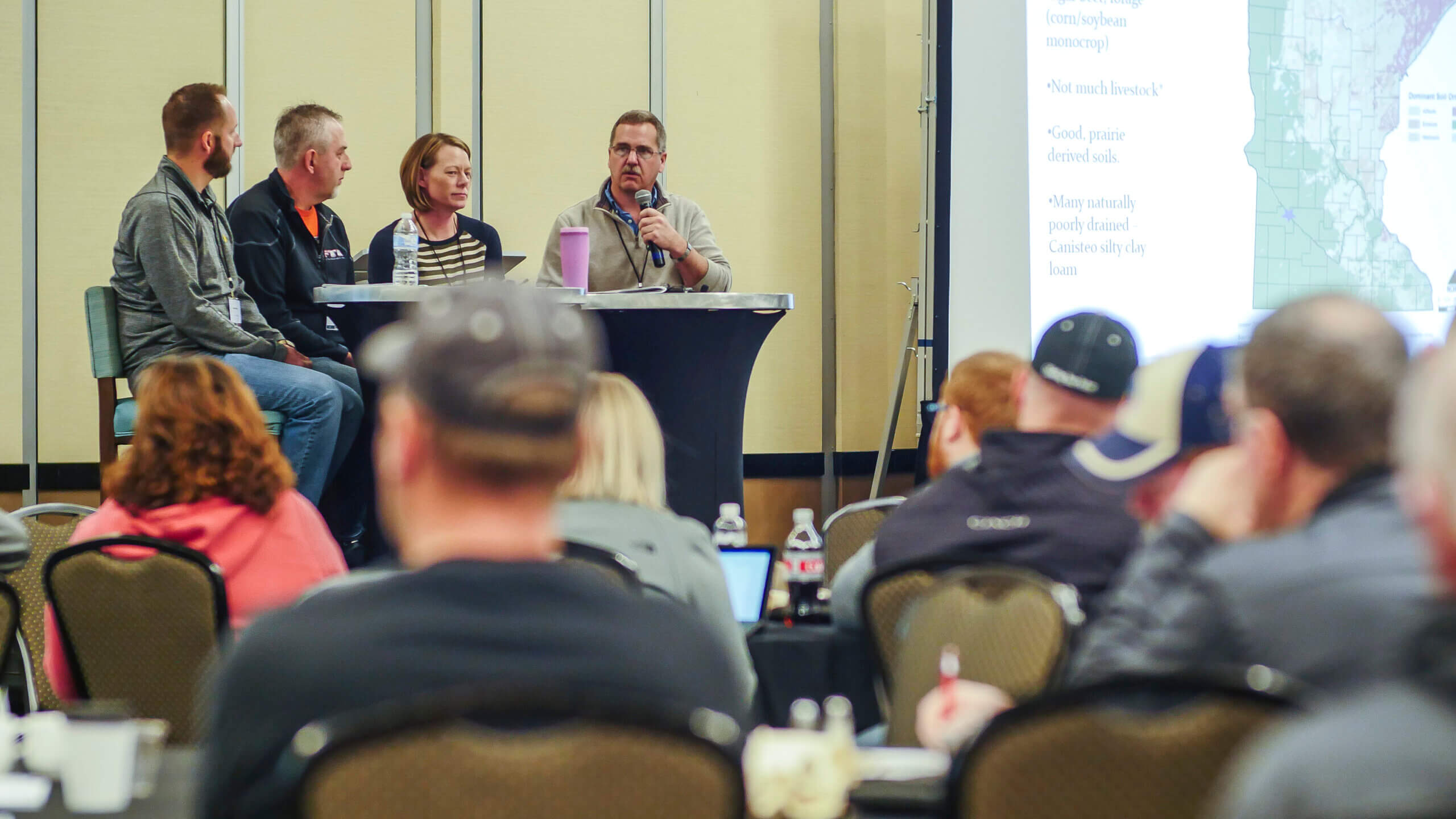
A big focus of the 2025 Soil Management Summit is how to successfully reduce tillage in a Minnesota cash crop operation. The 2025 agenda features sessions on nutrient management, cover crops 101, and pests as well as getting nutrients applied with reduced tillage, strip-till 101, and when to employ strategic tillage. The two day event, January 29 and 30 at the Mayo Event Center in Mankato, will draw experts and technicians from across the Midwest, in part because it takes place in conjunction with the Midwest Cover Crop Council annual meeting.
A star attraction at this year’s SMS is University of Wisconsin Prof. Brian Luck, an ag engineering expert who will speak about setting up your planter.
“(Brian Luck) gets into the nitty gritty of how to take care of your cash crop in a reduced tillage soil health situation,” said Prof. Anna Cates, director of Minnesota Office for Soil Health and an organizer of SMS.
Cates said, “(Luck) has done a lot of work on planter modifications and planter adjustments. He is really familiar with the ag engineering aspects like down pressure and closing wheels, which are critical if you are trying to plant into either a no-till seed bed, a seed bed with a lot of corn or soybean residue on it, or a seed bed with living cover crop in it.”
According to Cates there are alternatives to tillage, in performing the vital roles of fertilizer placement, breaking weed and pest cycles and getting a good seed bed. One of the best ways to learn about these alternatives is to talk to the farmers who have gone through it, by trial and error and intuition, as well as coaching from conservation experts.
Vance Johnson, who farms in northwest Minnesota, rotating corn, soybeans, wheat and sugar beets, will share his experience. Disaster is what led him to try reduced tillage.
Sixteen years ago, for the second year in a row, after heavy rains flooded his hilly farm 30 miles northeast of Breckenridge, Johnson had a huge gully develop on a hillside. “You could have dropped a pickup into that washout and not seen it.”
The next season he changed over from full conventional tillage to a vertical till coulter that only penetrates two inches into the soil. The washouts never reappeared after that, but even more importantly, about five or six years into the change in method, he discovered a major change had taken place—after heavy rains he could still bring his sprayer onto the field to attack waterhemp that threatened the soybean yield.
Ten years ago, seeing the success on the hill farm, Johnson began to change the rest of his farming operation, most of which is in the flats of the Red River Valley, over to minimum till. He decided to try cover crops as well. He was driven by the series of “open winters” when a lack of snow cover left his land vulnerable to wind erosion.
Now, Johnson minimum tills close to 100 percent of the flats, and grows cover crops in the off season on 75 percent of his ground. He feels the change is paying off.
With financial support from Minnesota Corn, Johnson is conducting a side-by-side on-farm study, comparing no-till, strip-till and conventional tillage—each of these three treatments grown with and without cover crops. SMS will offer a chance to hear Johnson talk about the economics of these systems over multiple crop years, and to find out about all his experiences with conservation methods.
Cates sums up the practical advantages many farmers see when they stick with reduced tillage: “It’s one less thing to do when there are a lot of labor shortages on farms across the state. And it’s cheaper. It’s a reduction in diesel because there are fewer passes across the field, usually, in a no-till or a strip-till system. The other advantage, long term, is that you are building soil structure. If you leave the soil alone and undisturbed and leave roots in it, most soils will give you good aeration as well as good water movement. You want to let that happen through the effects of the soil biology, rather than the activity of the tractor pulling an implement across the field.”
Minnesota Corn sponsors the Soil Management Summit as part of its mission to increase the sustainability, efficiency, and productivity of corn farming. Learn more about the 2025 Soil Management Summit here.