MCGA student Agvocate highlights his family's efforts to protect water quality
Written by Sam Peterson
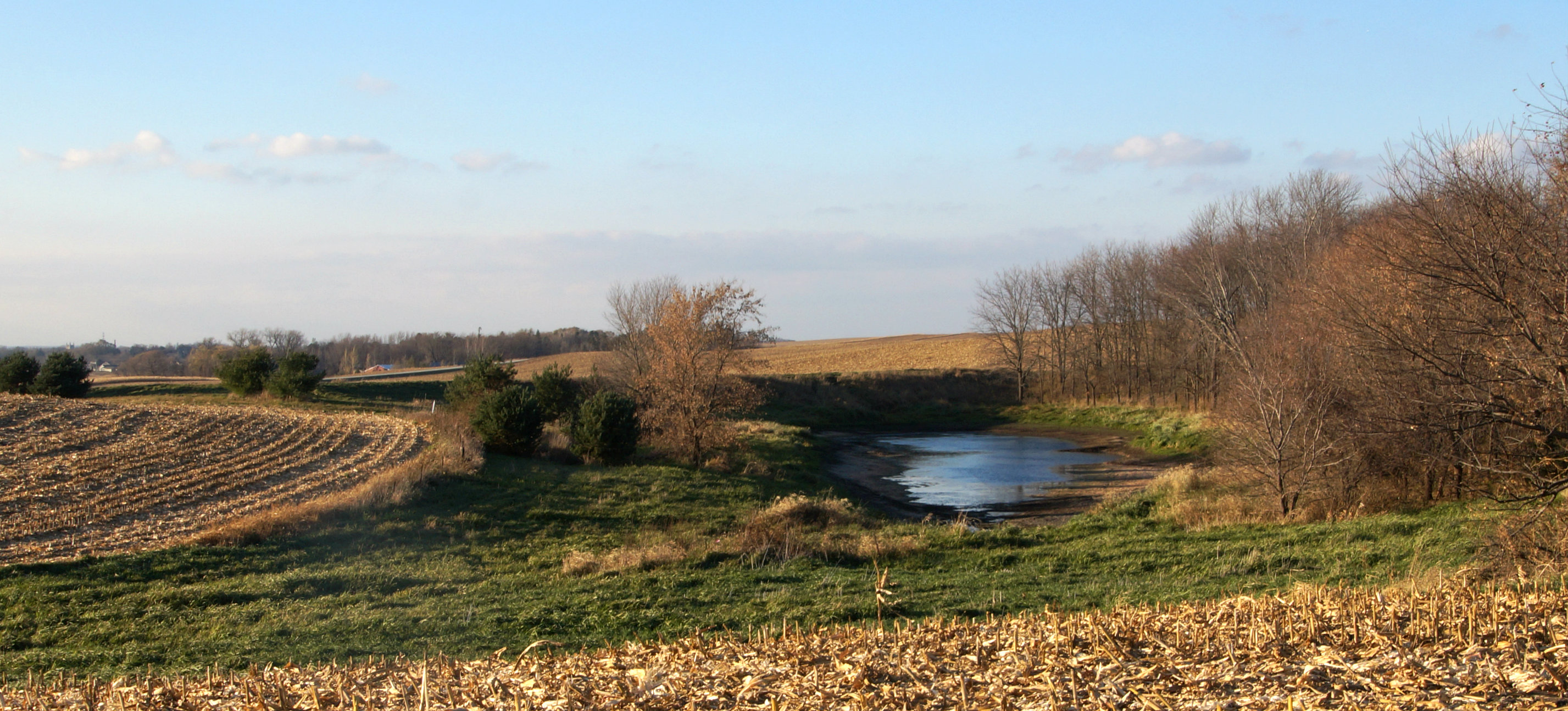
Water quality has become an increasingly heated issue surrounding agriculture in the last few years. On my family’s farm in Northfield, Minn., it has been a hot topic since I was born. My family is very concerned with the quality of the land we farm and that includes the quality of the water below and on the surface. We use many practices to help conserve the quality of water including buffer strips, terraces, water diversions, minimum tillage, and monitoring groundwater under our pig barns.
Specific conservation practices
Buffer strips are simply a non-farmed strip between the crop and any body of water. My family likes to plant grasses that flourish in a wet environment and are very resilient year to year. The grasses that are planted in the buffer slow down the runoff coming from the farm field during a large rain event. The runoff water coming off the field can contain valuable soil and nutrients. Farmer’s plant buffer strips in order to let this soil and nutrients slow down and be deposited in the buffer strip before reaching a body of water. The roots of the grasses then hold the soil in place and utilize the nutrients deposited there.
Terraces and water diversions have a similar motive as buffer strips. They slow down surface runoff in order to let the soil and nutrients be deposited instead of being washed into streams, rivers, or
lakes. Terraces and water diversions are manmade berms or dams with grass planted on them. Terraces are usually in the middle of fields and the crop is planted around them. Water diversions are built near buffer strips and help to slow down and divert surface runoff toward the grassy areas.
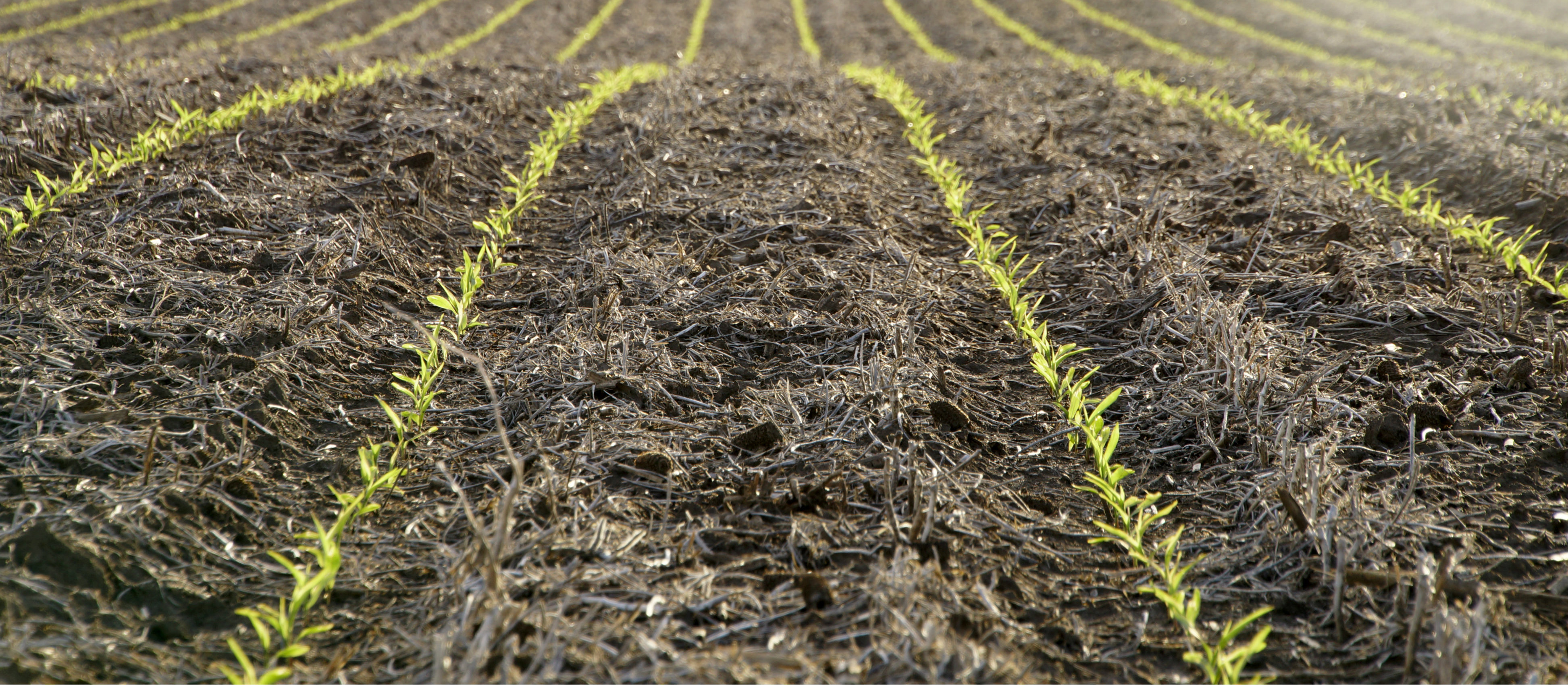
Minimum tillage practices is one of the newest technologies that have come to my farm. Minimum tillage practices are different forms of tillage that leave most of the crop residue (stems, leaves, cobs, pods) on the surface. Leaving crop residue on the surface reduces wind and water erosion. My farm utilizes vertical tillage which cuts and chops the residue to help it break down, but disturbs the soil very little. We also use no-till practices which do not involve any tillage whatsoever.
Protecting subsurface water
In addition to surface water, my farm is also concerned about subsurface water, which is often tapped for drinking water. On top of raising crops, we also have two pig barns at my farm. Under each pig barn is a cement containment for the manure. The manure storage pit is large enough to hold all of the manure that the pigs produce for an entire year. This would be detrimental to the environment if the manure were leaking into the groundwater. To monitor this, a groundwater collection system was installed under the barn before it was built. This allows us to sample and test that water regularly to ensure there are no leaks in the containment.
Our farm has a manure management plan. This requires us to have an adequate amount of land to apply our hog manure without overloading the soil with the crop nutrients present in the manure. Each time the manure is pumped out of our barn, samples of the manure are taken and tested for nutrient content like Nitrogen, Potassium, and Phosphorus. This gives us a better understanding of how much manure should be applied per acre each year. The fields that we apply the hog manure are also rotated so the same field never gets hog manure two years in a row.
Learn more about on-farm conservation
Water quality is something that farmers are very concerned about. My family takes the quality of water across the landscape that we farm as well as downstream very seriously. Seeding buffer strips, building terraces and water diversions, using different tillage practices, or closely monitoring groundwater in sensitive areas are ways that my farm conserves water quality. Many farmers have installed these practices, plus others, that are suitable for their cropping system or animals. Farmers are continuing to do research on more ways to help conserve our water now and in the future.
That’s a short description of the some water-quality practices on my farm. If you’d like to learn more about similar practices on other Minnesota farms, check out the Minnesota Corn Growers Associations new Conservation Story Map.
Sam Peterson is a Minnesota Corn Growers Association Student Agvocate who attends the University of Minnesota.