Study highlights advantage of U.S. corn in feed milling
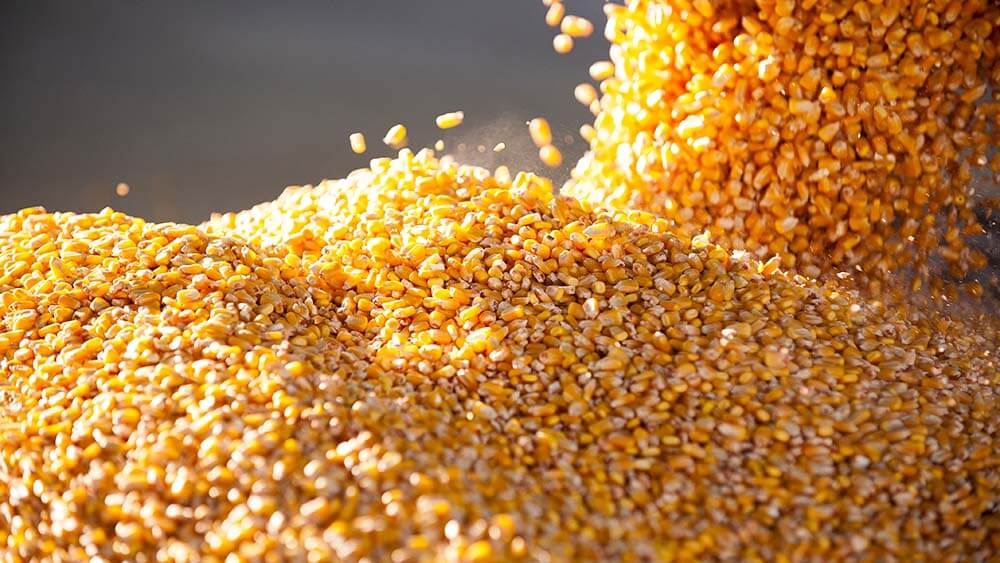
A recently completed study by the Minnesota Corn-supported U.S. Grains Council (USGC) gives U.S. grain marketers another point to highlight when comparing American corn to South American varieties.
U.S. corn takes approximately 5% less energy to mill than Argentinian varieties and 10% less energy to mill than Brazilian varieties, according to the research, which was conducted at the Fargo-based Northern Crops Institute (NCI). An analysis by USGC found that this efficiency could translate into tens of thousands of dollars in energy savings for a large feed mill.
Alexander Grabois, USGC’s Manager of Global Strategies and Trade, said U.S. corn is more efficient to mill because it has a higher proportion of soft endosperm.
All corn kernels contain endosperm, an assemblage of cells surrounding the embryo, or the portion of the kernel that grows into a new plant. Primarily comprised of starch molecules but also containing protein and trace amounts of oil and minerals, the endosperm provides a growing plant with energy and minerals until its roots and leaves are established.
Cell texture varies within the endosperm. Dent corn varieties, for example, contain a higher proportion of soft and floury endosperm, while flint corn varieties, which are commonly grown in South American, contain a harder endosperm. (The reason dent corn kernels develop their dents on the top is because the soft endosperm in the central core of the kernel collapses during drying.)
A higher proportion of soft endosperm means milling equipment can grind corn with less energy, which can also have an impact on equipment maintenance and longevity, Grabois said. “It’s a component that not everyone thinks about,” he said.
In addition to milling the Argentinian, Brazilian, and U.S. corn samples, NCI also used them to produce a pelleted swine feed containing 80% milled corn by volume. The institute then ran the finished pellets through tumbling cans to determine their durability.
Producing pellets from U.S. corn required slightly more energy than producing pellets from South American varieties, the study found. But the U.S. pellets were slightly more durable—they broke apart slightly less when ran through a tumbling can. That could be slightly advantageous for swine feeding operations since a higher proportion of intact pellets tends to correlate with better animal performance and feed conversation ratios, USGC says.
As a next step, USGC hopes to analyze milling performance, energy usage, and pellet durability using data from working commercial feed mills. It would eventually like to conduct a commercial trial in partnership with the Colombian mill from which it procured the samples for the study.
Changing perceptions of U.S. corn
The feed milling study is part of a broader effort by USGC to highlight the performance advantages of U.S. corn, which can be less cost competitive and visually appealing than South American varieties.
Paradoxically, that stems from U.S. corn’s higher proportion of soft endosperm. Because U.S. corn is softer, it can be more susceptible to breakage during transportation. This can lead to perceptions among buyers that U.S. corn is of a lower quality, when, in reality, it performs better than corn from other origins. These benefits can have significant impacts on outputs and profits of end-users worldwide.
In a 2024 webinar Kurt Shultz, USGC’s Senior Director of Global Strategies, said the council continues to stress the many advantages of U.S. corn to international buyers. Those includes the reliability of supply, the availability of independent corn quality data, the diversity of products available from U.S. producers, and customer service offered by USGC.
But he also said there needs to be a persistent and systematic approach to addressing perceptions about corn quality, noting that the feed industry, for example, does not reward risk-taking behavior.
“We have to give them a reason to take that risk and a justification for that risk,” he said.
He said shifting those perceptions won’t be easy and will take a company-by-company, rather than country-by-country, approach in some cases. And he stressed that it’s important for U.S. exporters to clearly articulate the financial benefits of U.S. corn to international buyers.
“We have to get the finances down so we can get their attention to reevaluate their existing operations,” he said. “Otherwise I think they’ll just say, ‘well, that’s nice. That sounds great. But I don’t see an incentive to change.”
Additional studies
In addition to the feed milling study, USGC also worked with the University of Illinois to wet-mill samples of corn from various origins. That study found that while the starch content of U.S. corn is comparable to international varieties, U.S. corn yields higher amounts of starch during wet milling due to genetic and compositional factors. The higher yields could increase profitability for wet milling plants to the tune of $1 million annually for each 1% starch yield increase at a 1,000-metric-ton-per-day plant. The Council has conducted commercial trials in wet milling plants in Latin America and in the North Africa region and has seen results that show that U.S. corn starch yields are over 2% higher than that of other origins.
Additionally, the council partnered with Auburn University to conduct poultry feeding trials with corn from various origins. That study found that U.S. corn allows birds to gain weight faster than Argentinian or Brazilian corn, creating cost savings for poultry operations. USGC is now conducting a feeding trial in Morocco.
Additionally, the council is partnering with Spanish ethanol plants on a trial to compare ethanol yields when corn from various origins is used, which has also shown higher yields using U.S. corn. USGC has also partnered with Purdue University to study ways to improve grain storage practices in tropical climates, focusing on Mexico.
Learn more about USGC’s efforts to change perceptions of U.S. corn at grains.org.