Lush
Written by Jonathan Eisenthal
This week much of the corn crop in Minnesota, across 8.5 million acres, will enter its reproductive phase. The USDA’s National Agricultural Statistics Service estimates that 74 percent of the state’s corn crop is in good to excellent condition.
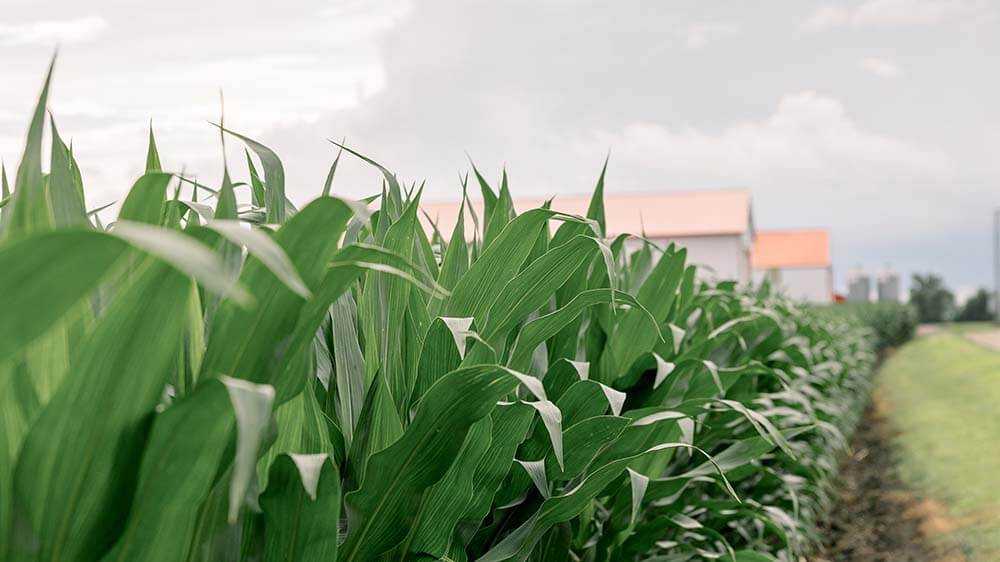
“The crop’s in good shape,” Extension agronomist Jeff Coulter confirmed. Coulter conducts research on corn cropping systems at the University of Minnesota research and outreach centers at Lamberton and Waseca. “Farmers are saying they’ve never seen the corn this green in southern Minnesota before….The crop is very lush.”
The color, Coulter said, reflects perfect nitrogen sufficiency in the plants. He attributes the crop’s progress to timely rains—enough for growth but not an excess that would bring stress. University of Minnesota sources report higher than average heat units in April and May, but nothing record breaking.
Coulter made one caveat to the overall picture of crop health. The Willmar-area in West Central Minnesota, and north along the Red River Valley, has experienced excessive moisture and ponding in low lying areas that have led to crop losses, as have other isolated areas in the state.
Jerry Demmer, a farmer near Albert Lea, Minnesota, described a potentially bountiful crop.
“At this point and time in the middle of July, I don’t think I’ve ever seen a more beautiful crop than what we have coming right now,” Demmer said. “We’re 100% from field edge to field edge…. This is my 54th growing season. I can see the potential that this could be the highest yield I’ll ever raise in my life.”
Demmer noted that nothing is ever a given, and weather remains a wild card. He reported that just a few miles to the east of his operation farmers were hit with a windstorm and sudden downpour in June that was very destructive. Over the weekend, a five-inch downpour added unnecessary moisture on Demmer’s fields, but the crop weathered it and he feels fairly certain that the store of moisture will carry them through August now.
Noah Hultgren, who farms with his parents and older brother in the Kandiyohi County area near Willmar, confirmed that a different rain event in June poured “double digit” rain amounts, and the precipitation has continued in July, resulting in the total loss of 1% to 2 % of their corn ground and many acres where he feared yield would prove to be severely diminished when they pick the crop in the fall. Some areas near Willmar reported 17 inches of rain during that single event.
Hultgren Farms has grown over the years and become diversified into different crops, and by acquiring different types of landscapes ranging 30 miles to the north and 30 miles to the west of their home farm, and 10 miles south and 10 miles east: it has grown to include an area of irrigated land. The overall strategy helps them deal with this kind of weather woes through the geographic spread, and the different soil types. They even raise a small beef herd, managed by his parents, Duane and Nancy.
“One consolation—the corn that was untouched by the storm is growing really well. It’s going to yield well,” Hultgren said.
Coulter estimated that corn yields at the research and outreach center in Waseca could reach 240 bushels per acre, or higher, and 230 bushels per acre at the Lamberton station. Pollination this week and next, followed by the next couple weeks for kernel set, will be the most critical phase in determining that yield, he said.
“Given that we’ve got good soil moisture supplies, and also that the temperatures for the next week are looking moderate, I think we’re in a really good situation for successful pollination. These (soil) moisture levels should hold for a while, so the crop should be able to go off this for a while.”