A record year for exports to Mexico
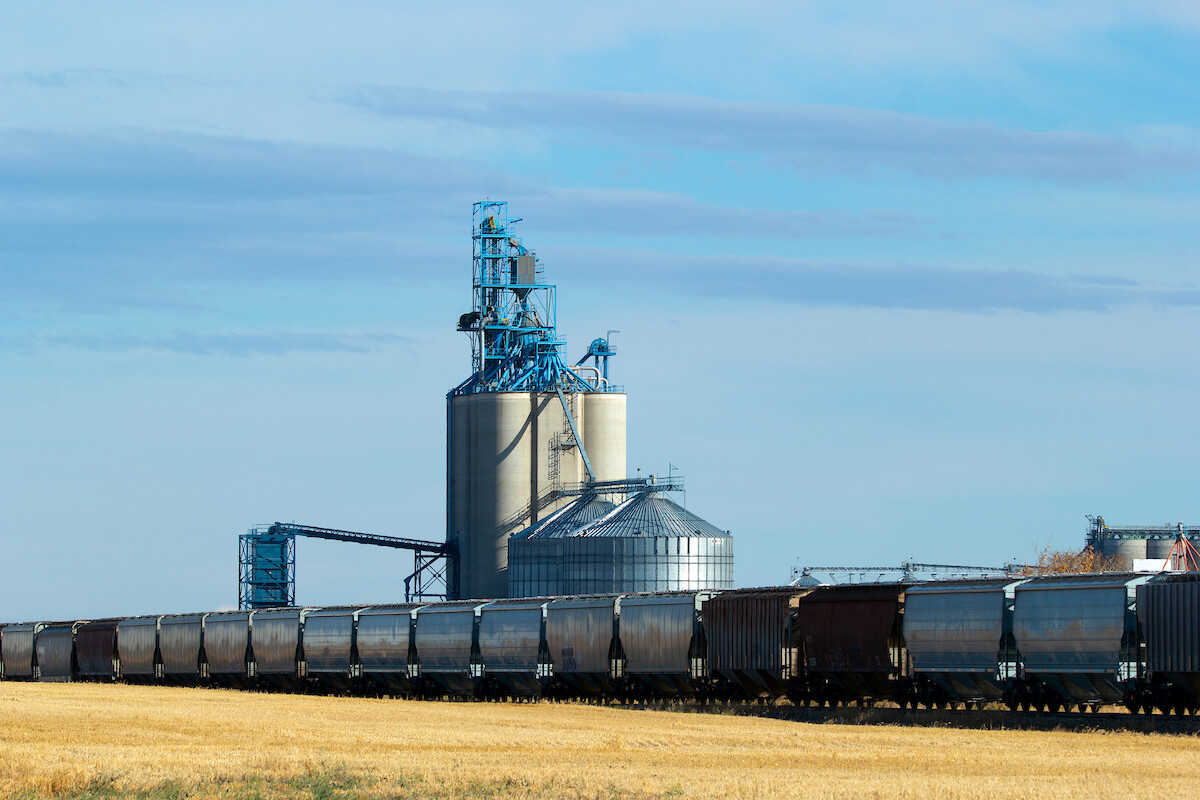
Robust expansion in the livestock sector drove record sales in 2024-25, USGBC director says.
When it comes to Mexico, U.S. corn is having a moment.
During the 2024-25 marketing year, the U.S. exported over 1 billion bushels of field corn to its southern neighbor. That was a record to a single country, and it marked the first time the U.S. had ever exported more than 1 billion bushels to a single destination.
All told, the U.S. exported over 37.4 million metric tons worth of coarse grains, co-products, ethanol and meat products to Mexico in 2024-25, according to the U.S. Grains & BioProducts Council (USGBC). That was a nearly 50% increase compared to the 2020-21 marketing year.
Heidi Bringenberg, USGBC’s Mexico director, attributed the steady growth in U.S. corn exports to Mexico to robust expansion in the country’s livestock sector. That demand has been fueled, she said, by a growing lower-to-middle-income population and rising domestic consumption of meat and dairy products. She also said Mexico has been relying more on imports in recent years because variable yields, limited arable land, and drought-induced domestic production challenges.

Each year as part of its mission to develop markets for corn, co-products, ethanol, and meat, Minnesota Corn invests checkoff funds in USGBC. The organization has a robust presence in key markets across the world, including in Mexico, where Bringenberg leads a staff that conducts a variety of programming.
Recently, Minnesota Corn caught up with Bringenberg to learn more about her background and her team’s efforts. You can learn more about USBC’s Mexico office at grains.org.
Tell us about your background. How did you get into the position you’re in today?
I graduated from George Washington University with a focus on international affairs and an interest in agricultural policy and trade. Right after graduation, I joined the U.S. Grains Council in 2013, starting in roles like global programs coordinator and global programs manager that provided me with the building blocks for the breadth of the global work we do. In late 2016, I transitioned to our Mexico office as Assistant Director, where I worked closely on programs to expand U.S. grain exports, including corn and coproducts with our director at the time, current CEO Ryan LeGrand who was focusing more heavily on ethanol promotion and policy work.
My passion for building strong agricultural ties between the U.S. and Mexico—especially in emerging market opportunities for ethanol—led to my promotion to Country Director in 2022. It’s been rewarding to lead initiatives that support U.S. farmers while fostering economic growth and building on long lasting friendships here in Mexico.
Tell us about USGBC’s Mexico office. We understand you run programs focused on feed miller organizations. What else does your office do, and how does it affect farmers here?
Our Mexico office focuses on developing and maintaining our largest market for U.S. feed grains, industrial use (tortillas and snack foods) and co-products, with a primary emphasis distiller’s dried grains with solubles (DDGS), and corn fermented protein (CFP). A core part of our work involves targeted programs with feed miller organizations across Mexico to improve feed efficiency, quality assurance, and procurement practices. We deliver hands-on training through events like the annual Corn Quality Report rollouts, Grain Procurement and Purchasing Courses, regional and local buyers conferences, and Rail & Vessel Importers Team visits. We aim to help feed millers optimize and quantify the economic benefits of their use of U.S. grains in poultry, pork, dairy, and aquaculture production. These efforts directly support Mexican livestock producers by providing access to reliable, high-quality U.S. feed ingredients, strengthening supply chains, and boosting competitiveness in a market where feed demand is projected to reach 44 MMT by 2030. By prioritizing U.S. origins, we help create stable demand that benefits American farmers while supporting Mexico’s growing animal protein sector.
What initiatives is your office focused on heading into 2026?
Heading into 2026, our office is prioritizing policy advocacy and market development for feed grains and coproducts like corn fermented protein as part of Mexico’s evolving agricultural and trade landscape. Key new initiatives include intensifying procurement training for Mexican buyers to increase sales enabling capacity, expanding storage programs designed to defend U.S. origin, and sustainability outreach to new regions and companies via the Corn Sustainability Assurance Protocol (CSAP) and CFP product introduction, through shrimp feeding trials to distribute and gain more visibility among this growing sector.
We are also actively working to apply for increased funding through the America First Trade Promotion Program (AFTPP) to scale these efforts and position Mexico as a model market for the superior U.S. grains brand. This involves highlighting U.S. advantages in quality, contracts, price, logistics, and long-term relationships, supported by evidence from our ongoing storage trials, grain handling trainings, and roadshows that demonstrate improved quality preservation, reduced losses, and better end-product performance for Mexican buyers.
As for our other products, we continue to monitor sorghum opportunities amid Chinese supply shifts, and reinforce barley contracting with major brewers like Constellation and Heineken. Finally, we are already working with Mexican and U.S. government to leverage the 2026 USMCA review to protect market share and resolve trade barriers, building on successes like the 2025 repeal of GM corn restrictions.
Mexico has been the top U.S. corn importer for years, but the country’s corn imports have grown steadily in recent years—up from 614 million bushels in Marketing Year 2021 to over 1 billion bushels in Marketing Year 2025. What do you attribute this uptick in demand to? How would you describe USGBC’s role in generating this additional demand?
This steady growth in U.S. corn imports to Mexico is primarily driven by robust expansion in the livestock sector, including poultry, pork, and dairy, fueled by a growing lower-to-middle-income population and rising domestic consumption of meat and dairy products. Mexico’s reliance on imports has increased also due to domestic production challenges due to three years of extreme drought, variable yields and limited arable land, however some of this is recovering.
USGBC’s role in accelerating this demand has been central—we deliver targeted education on quality assurance constantly inform purchasing decisions for the largest corn importers like GRUMA, Bachoco, and SuKarne. Our programs and seminars on hedging and logistics, equip buyers with skills to prioritize U.S. origins, resulting in direct sales, optimized supply chains, and preference long term for the U.S. origin over Brazil.
Where do you see opportunities for growth when it comes to U.S. imports in 2026?
In 2026, we see strong growth opportunities for U.S. grain imports in Mexico across multiple fronts. Ethanol blending, particularly with the anticipated NOM-016 update and implementation of secondary biofuels laws, could significantly boost demand for U.S. ethanol—potentially adding millions of bushels if E10 becomes widespread. [Note: NOM-16 is the primary regulatory framework in Mexico governing ethanol and fuel specifications. The standard caps ethanol fuel blending at 5.8% and bans the use of ethanol in the country’s three biggest cities— Mexico City, Guadalajara and Monterrey.]
Sustainable aviation fuels (SAF) under Plan México present another longer-term avenue. In feed, continued expansions in poultry, pork, and dairy sectors will drive needs, especially in states like Veracruz and Nuevo León. Additionally, the USMCA review offers a platform to align biofuel policies regionally, enhancing trade flows. USGBC will support this through pilots, stakeholder engagement, and data-driven advocacy to ensure sustainable, low-carbon growth.
MCGA and NCGA have been active in recent months in calling for a full renewal of USMCA, given its tremendous benefits to corn farmers. What role will your office have in advocating for the agreement’s renewal?
USMCA has been a game-changer for producers and consumers on both sides of the border, enabling seamless trade and economic integration. Our Mexico office will play a supporting advocacy role in the 2026 joint review process by collaborating with partners like NCGA to highlight the agreement’s benefits, such as stable access for U.S. corn exports and strengthened agricultural value chains. As much as we can, we’ll provide technical input to USMCA-established committees, emphasizing how biofuels like ethanol can enhance regional decarbonization and rural development. And from my side, in Mexico, I am coordinating with local Mexican industry stakeholders to align on their consultations—and with high level dialogue in Mexican ministries (Economy, Agriculture). Together we are positioning USMCA renewal as essential for producers, our trade balance, investment, and sustainability. We’re looking at finding new platforms also for increased data sharing and stakeholder forums, to ensure voices from U.S. and Mexican farmers are heard.
Ethanol is a significant opportunity for growth in Mexico as you well know, and NCGA has urged USMCA-established committees to work on an ethanol-blending program in the country. What is your office doing to facilitate additional ethanol demand?
Absolutely! Ethanol represents a tremendous opportunity for Mexico’s energy transition and U.S. ethanol demand. Our office is actively facilitating this through multifaceted efforts aligned with the publication of Mexico’s 2025 Biofuels Law and secondary regulations, which provide a comprehensive framework for production, imports, blending, permits, etc. President Claudia Sheinbaum has also made positive comments around ethanol blending and Mexico’s SAF production goals at her national press conference. With this we feel positive for the long-awaited update to NOM-016 to enable nationwide E10 adoption and potentially higher blends in the future. Through USGBC and our locally supported association, Biomovilidad, we’ve engaged Secretaries of Energy, Agriculture and Economy to advocate for this regulatory update – and enable legal certainty for biofuel blending.
We also continue to run and expand successful state-led pilots like the E85 flex fuel taxi trial in Monterrey, which demonstrated over 15% emissions reductions, significant cost savings (projected up to $19,230 MXN per vehicle over its lifespan), and economic viability—generating positive momentum and data to pressure regulators and state authorities for broader implementation.
In 2026, we will provide ongoing technical support to Pemex (Mexico’s state-owned oil company), the agriculture and energy ministries, and the Instituto Mexicano del Petróleo (IMP) on blending standards, infrastructure compatibility, lifecycle assessments (LCA), and biomass programs, including follow-up technical missions to U.S. facilities to showcase production processes, logistics, and benefits. We’re collaborating at the state level (e.g., Tamaulipas via our MOU for public transport decarbonization, Nuevo León, Veracruz, and others) to develop local pilots using surplus sorghum and sugarcane.
We are going to continue pushing for ethanol-focused discussions in USMCA committees during the 2026 review to foster regional policies that favor biofuels. These initiatives support the Mexican national goal for bioethanol production by 2030 from surplus crops, creating substantial new demand for U.S. corn while advancing Mexican sustainability and energy security.