Corn-based PLA could join major markets thanks to biodegradability research
by Jonathan Eisenthal
Corn-derived plastics called PLA polymers are helping drive growth in the biodegradable plastics industry and creating potential new uses for corn beyond food and fuel markets.
The challenge is balancing performance and biodegradability. Consumers want products that are durable and reliable during use, but capable of breaking down naturally after disposal. However, many current PLA products still require industrial composting environments with carefully controlled temperature, moisture, and microbial activity to fully degrade.
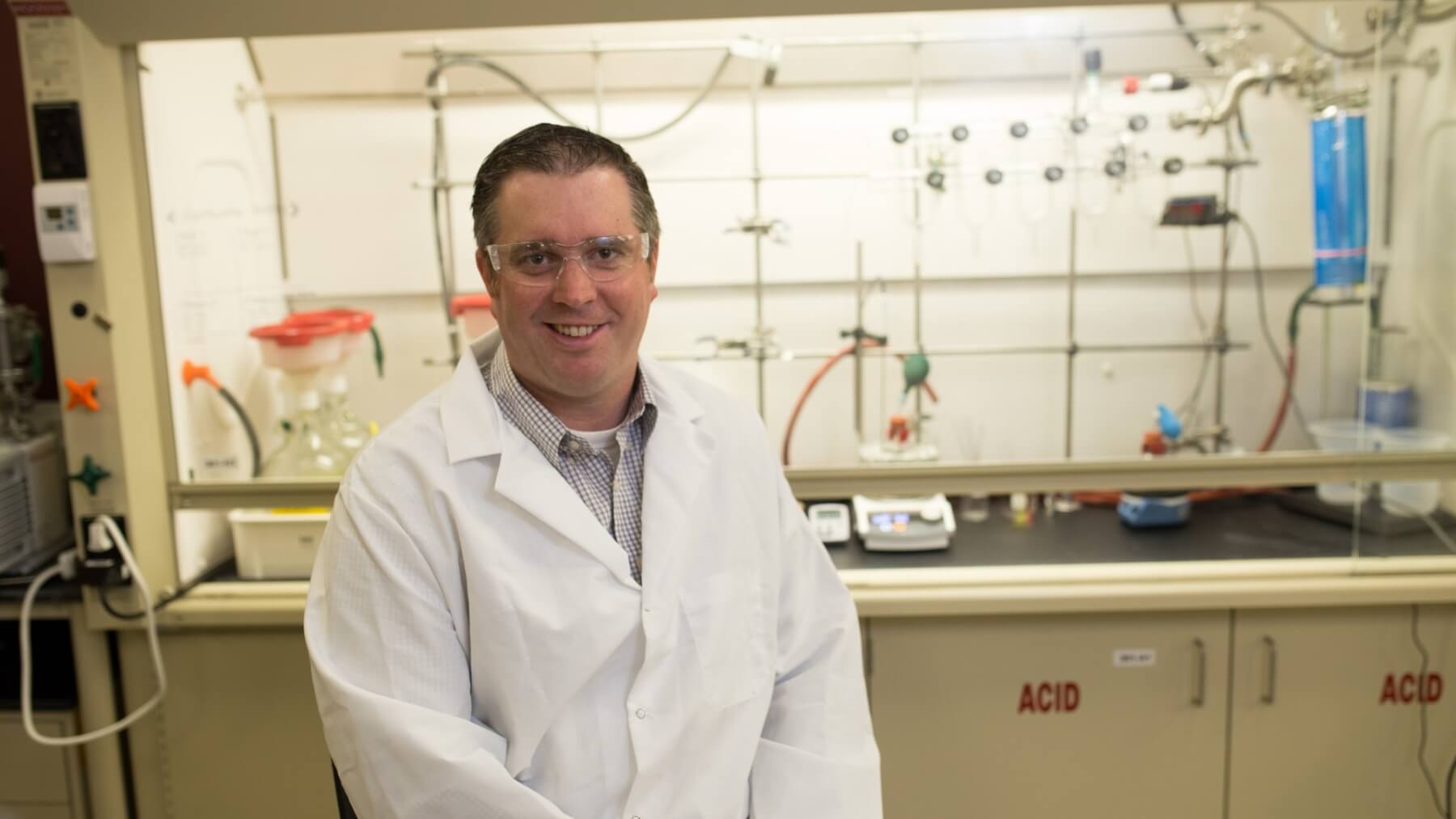
New research supported by the Minnesota corn checkoff at the University of Minnesota’s Center for Sustainable Polymers (CSP) is focused on improving how efficiently PLA breaks down while maintaining the performance properties needed for real-world applications. Led by professors Chris Ellison and Marc Hillmyer, scientists are adding acidic compounds into PLA that create more short polymer chains within the material. That in turn can accelerate the microbial decomposition process, which is known as hydrolysis.
“When the polymer chain is processed by microorganisms upon hydrolysis, it does not leave toxic byproducts behind,” Ellison said. “It becomes lactic acid and then ultimately (breaks down into) into biomass, CO2, and water.”
Ellison said a small amount of the additive— a concentration less than 1%—could go a long way toward increasing the decomposition rate.
He said scientists are experimenting with different formulations of the PLA-additive blend to account for the various lifespans of different plastic products. They wouldn’t want a polymer product to begin degrading while still in use by a consumer.
One promising agricultural use is mulch film, which is commonly used to help retain soil moisture in fruit and vegetable production.
“You’d like the plastic to degrade in a single growing season, because you don’t want to be plowing in the spring and digging up a bunch of plastic,” Ellison said. “There, the PLA is exposed to the sun, and to the other elements. So, we have a tall task. Our research is focused on understanding how we can control the process of degradation, to tailor it to these different applications.”
Another challenge to the use of these new additives is that PLA is not always used by itself. It is sometimes blended with a polyester called PBAT, other times with a material called thermoplastic starch that adds pliability to the plastic, and sometimes all three materials are used together in a single application.
Ellison said, “We want to see if our additives work with these other materials in the same way they work with PLA. All three materials intersect with a whole range of agricultural applications. We’re trying to understand our additives, how they perform in these different blends. Obviously, we’re really focused on PLA because corn is used in its manufacture, but the markets for the various blends are all really important in agriculture too.”
The research will span three years, during which time Ellison and his colleagues hope to translate this technology into useful products. Several local companies that use PLA will help them test this new technology in the things they make.
Ellison loves the agricultural connection to his scientific work.
“I grew up in farming communities, and my family farmed in Nebraska,” Ellison said. “Now, as a professor who does fundamental research on plastics, it’s really satisfying to have partnership with Minnesota Corn and try to drive the value of corn forward.”