Murdock farmer Todd Wentzel set to take helm at MCGA
Written by Jonathan Eisenthal
“People, Planet, Profit,” is an-often used phrase by farmer-leaders at Minnesota Corn, one that Todd Wentzel likes to use the phrase to frame the priorities for American farmers. First, to provide the food, fiber and fuel that people need and want, but to do so within the bounds of the earth’s capacity for resilience, and also to earn enough money to stay in business and to provide for family and maintain the vibrance of rural communities where most agriculture happens.
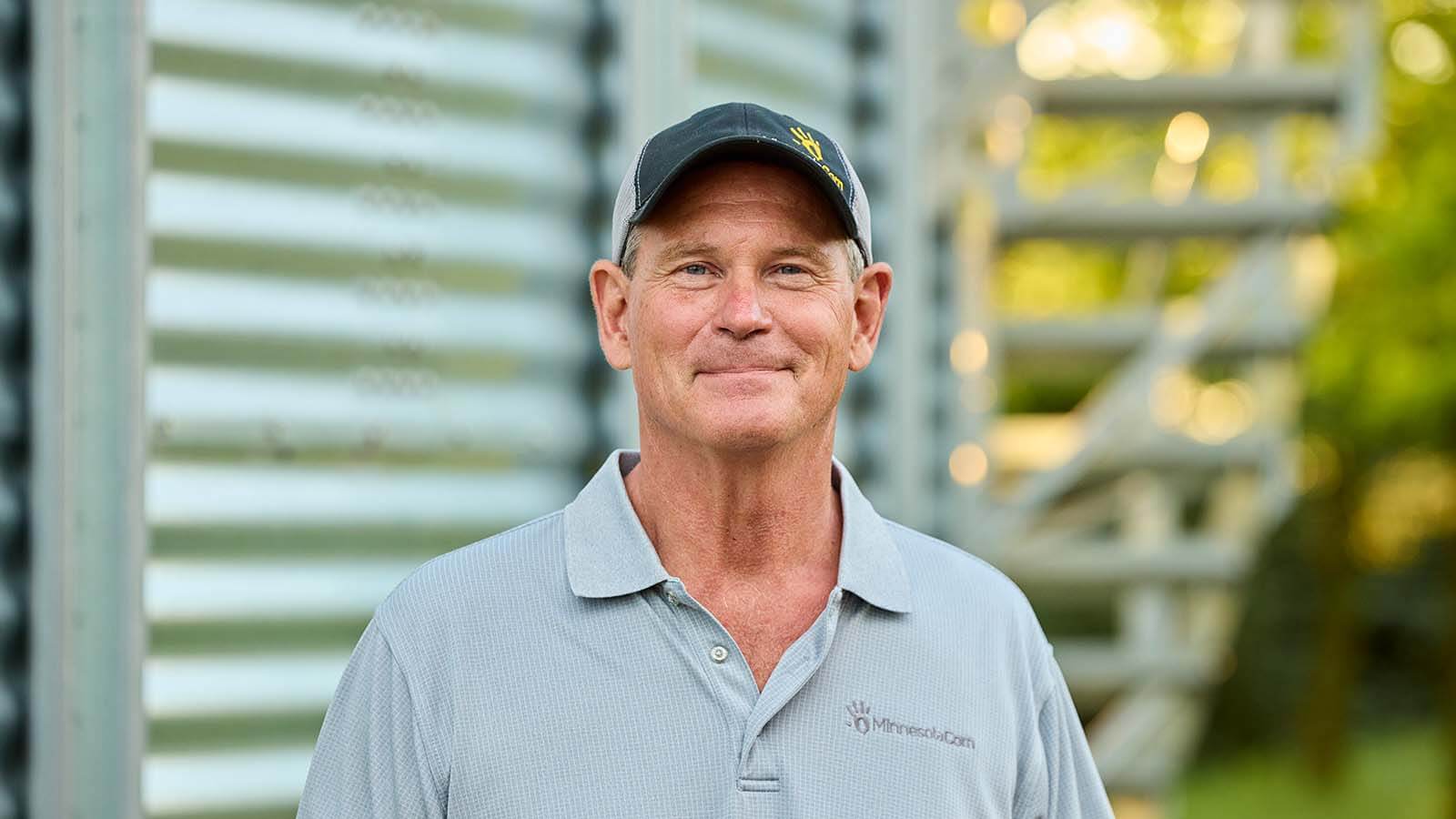
Wentzel begins his yearlong term as president of the Minnesota Corn Growers Association (MCGA) on October 1.
He farms with brother Craig in Murdock, Minnesota, not far from Benson, where he is a shareholder in the Chippewa Valley Ethanol Cooperative. Todd and Craig farm in partnership with their wives, Shari (Todd) and Bonnie. They raise dry edible beans, spring wheat, corn and soybeans.
Wentzel finds purpose and excitement in the work of Minnesota Corn, to reach out to farmers and citizens, to teach people about agriculture, and to advocate for the practices and tools that keep farmers productive and profitable.
Asked about what tops the agenda in the coming term, Wentzel said, “We certainly want to get the Farm Bill finished up. A big win would be getting nationwide year-round E15 passed. Also, in the Farm Bill, there’s been a couple bills that have been introduced for fertilizer transparency and mandatory price reporting to help on the input side, to lower input prices, hopefully.”
Focusing on state-level issues, Wentzel said it will be important to help lawmakers and policy professionals understand the needs of Minnesota’s farmers.
“With the election in November, we will have some incoming freshmen legislators, and it’s our goal to help them understand things that corn farmers have to deal with and agriculture as a whole,” said Wentzel. “If the legislators want to come out and see a farm and learn about corn production in Minnesota, we welcome that chance.”
A key issue will be preserving the use of crop protection tools.
“Seed treatments, for example, are a valuable tool that farmers use, and I believe they are safer for the environment than the alternatives,” Wentzel said.
As a shareholder in an ethanol plant, Wentzel appreciates the role of value-added enterprises in the health of the farm economy.
“It’s a win-win for when you’re making ethanol, you’re also creating dried distillers’ grains. That’s a great feed source,” Wentzel said. “You’re making corn oil and a lot of other things coming out of that bushel of corn than just the alcohol for fuel. When CVEC was built in the mid-to-late 90s, farming wasn’t very profitable. There were a lot of young people deciding they couldn’t continue their family tradition of farming. But having that ethanol plant and other plants in the state has improved the demand for corn and made it possible for young people to stay on the farm, come back to the farm, and start farming with their parents or on their own.”
Thinking of the catchphrase ‘People, Planet, Profit,’ Wentzel explained his hopes for Minnesota Corn and for all farmers in the state:
“We want to have good relations with the public and to help people understand agriculture and particularly the farming of corn. As farmers we think of the planet, the sustainability piece, every day. We put a lot of thought and intention into how we can be sustainable and farm sustainably for the future. We can’t forget profit. We want to have the tools necessary to raise a good crop and to provide food for the nation.”